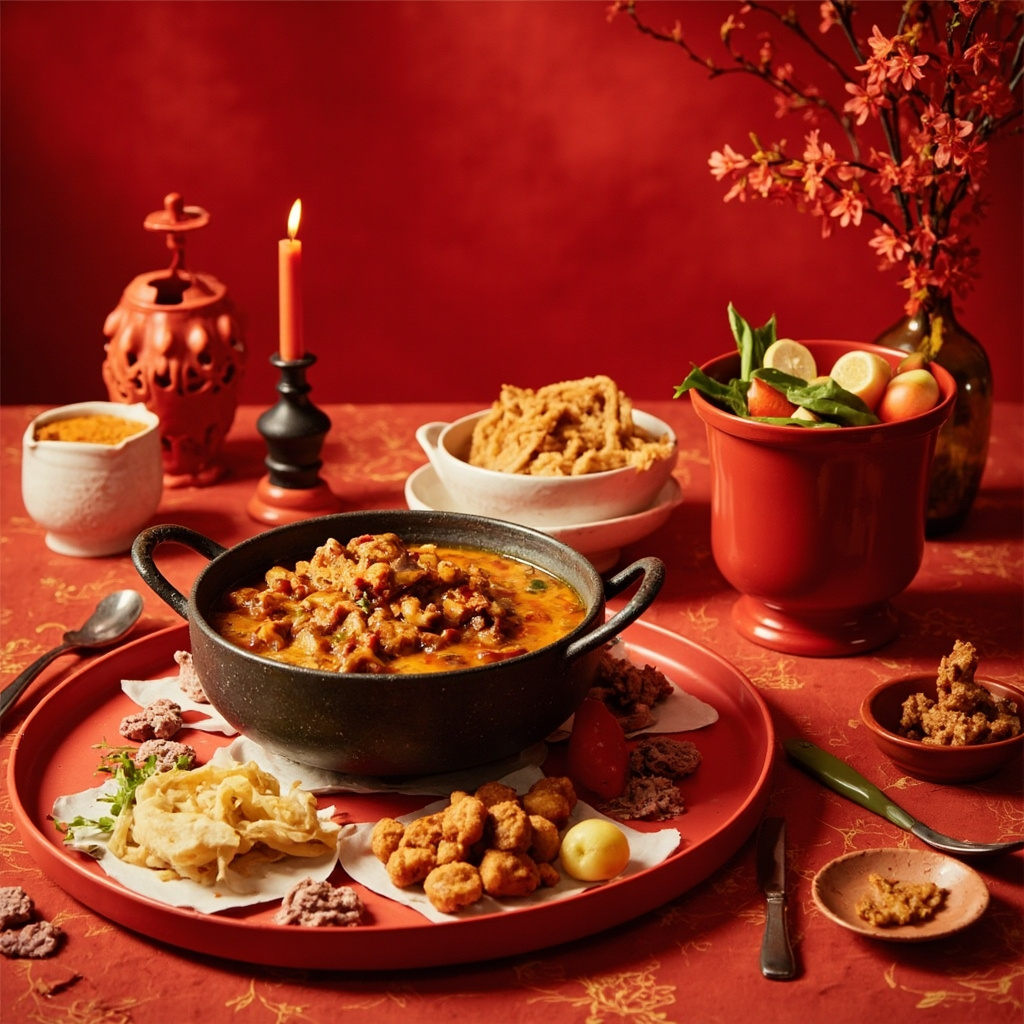
The Chinese New Year reunion dinner, called *niányèfàn* (年夜饭) in Mandarin, is the most important meal of the year.
The Reunion Dinner
The Chinese New Year reunion dinner, called niányèfàn (年夜饭) in Mandarin, is the most important meal of the year. Families gather on New Year's Eve to share this meal and close out the past year together. Every dish served has meaning, chosen to bring good fortune in the year ahead.
This dinner matters so much that family members travel long distances to be there. The term niányèfàn literally means "year-end evening meal," but it's really about honoring ancestors, catching up with relatives, and strengthening family bonds before the clock strikes midnight.
The food itself works like a language of blessings. Many dishes get chosen because their names sound like lucky words in Mandarin or Chinese dialects—words for prosperity, longevity, or completeness. By eating these foods, families take in the good wishes they represent and set a hopeful tone for the year.
Essential Festival Dishes: Fish and Abundance
Fish appears at almost every Chinese New Year meal because the word for fish in Mandarin (鱼, yú) sounds like the word for "surplus" (余, yú). This pun underlies the most common New Year blessing: 年年有余 (nián nián yǒu yú), which means "may you have abundance year after year."
How the fish gets served matters. A whole steamed fish, head and tail intact, represents a complete year—a good beginning and end. The fish usually faces the elders or guests of honor as a sign of respect. Tradition says you should leave some fish on the plate. That leftover represents the real surplus you're hoping to carry into the new year.
Fish leads the table, but other dishes bring their own blessings too.
| Dish | Mandarin (Pinyin) | Symbolism |
|---|---|---|
| Dumplings | 饺子 (jiǎozi) | Wealth, because their shape looks like ancient gold ingots |
| Spring Rolls | 春卷 (chūnjuǎn) | Prosperity, shaped like gold bars when fried golden |
| Glutinous Rice Balls | 汤圆 (tāngyuán) | Family togetherness; the name sounds like "reunion" (团圆, tuányuán) |
| Longevity Noodles | 长寿面 (chángshòu miàn) | A long, healthy life; served uncut in one long strand |
| Good Fortune Fruit | 橘 (jú) | Luck and wealth; the word sounds like "luck" (吉, jí) |
Dishes for Wealth: Dumplings and Spring Rolls
Two foods show up everywhere during Chinese New Year because they're shaped like ancient money. Eating them means you're asking for prosperity in the coming year.
Dumplings (jiǎozi, 饺子) matter most in Northern China—families there consider them essential on New Year's Eve. The crescent shape mimics yuánbǎo, the gold ingots people used as currency centuries ago. Wrapping dumplings becomes a family activity, with everyone gathering around to fill, fold, and seal. Some families hide a clean coin inside one dumpling. Whoever finds it supposedly gets extra good luck and wealth all year.
Spring rolls (chūnjuǎn, 春卷) are bigger in the South. When fried right, they turn golden yellow and look exactly like small gold bars. That visual connection makes them powerful symbols of wealth. Eating them is a tasty way to invite riches into your life.
Dishes for Growth and Longevity
Beyond wealth, Chinese New Year food speaks to bigger wishes: career success, long life, and family unity. These dishes carry that symbolism on the plate.
Nian Gao (年糕) for Rising Success
Niángāo means "year cake," but it sounds like "year high"—a pun about getting higher and higher. People eat this sticky rice cake hoping for progress in work, business, or even children's growth. The cake itself is dense and chewy, made from glutinous rice flour. Families prepare it sweet with brown sugar or savory with vegetables and meat. Either way, eating it means you're aiming higher in the year ahead.
Longevity Noodles (长寿面) for a Long Life
No Chinese New Year table is complete without chángshòu miàn—longevity noodles. These aren't regular noodles. They're one extremely long strand, served uncut in the bowl. The length directly represents the length of your life. You never bite through or cut these noodles—that would "cut short" your lifespan. You slurp them up whole instead.
Tangyuan (汤圆) for Family Togetherness
tāngyuán are sweet glutinous rice balls filled with black sesame or red bean paste, served floating in warm sweet soup. Their round shape and how they float together in the bowl symbolize family reunion. The name even sounds like tuányuán, the word for reunion. These balls of sweetness are everywhere during the festival but officially belong to the Lantern Festival, which marks Chinese New Year's end.
Essential Mandarin Phrases for Ordering Food
To order food in Chinese, the main structure is "Wǒ yào..." (我要...), which simply means "I want...". It sounds direct, but that's normal in Chinese dining. Politeness comes from tone—start with "qǐng" (请, please) and end with "xièxie" (谢谢, thank you).
Many language learners hesitate with wǒ yào because it feels blunt compared to "I would like." But in Chinese, this phrase works perfectly well and gets the job done efficiently. Don't overthink it.
Here's what you need to know.
Getting Started: The Menu
First, get the server's attention. Then ask for the menu politely:
- Chinese: 你好,请问有菜单吗?(Nǐ hǎo, qǐngwèn yǒu càidān ma?)
- Meaning: "Hello, excuse me, do you have a menu?"
- Breaking it down:
- 你好 (Nǐ hǎo) — Hello
- 请问 (Qǐngwèn) — Excuse me / "May I ask..." (polite way to start questions)
- 有 (Yǒu) — To have
- 菜单 (Càidān) — Menu
- 吗 (ma) — Turns statements into yes/no questions
Placing Your Order
Once you've decided what you want, use one of these structures. The first one works best.
| Structure | Meaning | When to Use | Example |
|---|---|---|---|
| 我 要 (Wǒ yào) + dish | "I want..." | Most common and natural way to order | 我要一个年糕 — "I want a nian gao" |
| 我想要 (Wǒ xiǎng yào) + dish | "I would like..." | Softer, closer to "I'm thinking of having..." | 我想要一份饺子 — "I would like a portion of dumplings" |
| 请给我 (Qǐng gěi wǒ) + dish | "Please give me..." | Very polite, adding "please" at the start | 请给我一盘鱼 — "Please give me a plate of fish" |
A Note on Politeness in Mandarin
Chinese politeness lives in small gestures beyond the words themselves:
- Always say 谢谢 (xièxie, thank you) — when you get the menu, after you order, when food arrives
- Use a friendly tone — a warm tone makes phrases like wǒ yào feel welcoming
- Add 请 (qǐng, please) — start almost any request with it for extra formality
With these phrases, you're ready to order and enjoy your Chinese New Year feast.
Asking for Auspicious Recommendations
To discover the best holiday dishes, ask your server about their signature items or—better yet—ask specifically for dishes with lucky meanings. These phrases show you want the cultural experience, not just a meal.
Asking for Signature Dishes (招牌菜, Zhāopái Cài)
Start by asking for zhāopái cài, the restaurant's most famous dishes. This term literally means "signboard dish." These aren't always New Year-specific, but they're reliably good.
- Chinese: 你们有什么招牌菜?
- Pinyin: Nǐmen yǒu shé me zhāopái cài?
- Meaning: "What are your signature dishes?"
Asking Specifically for Auspicious Dishes
To go deeper into the festive experience, ask for dishes with hǎo cǎitóu—good omens or lucky meanings. This shows you care about symbolism, not just taste. It's the best way to hear about special, off-menu items.
- Chinese: 请问有什么好彩头的菜吗?
- Pinyin: Qǐngwèn yǒu shé me hǎo cǎitóu de cài ma?
- Meaning: "Excuse me, do you have any dishes with auspicious meanings?"
A simpler alternative:
- Chinese: 有什么过年吃的特别的菜吗?
- Pinyin: Yǒu shé me guònián chī de tèbié de cài ma?
- Meaning: "Do you have any special dishes for the New Year?"
Complimenting the Food and Host
Showing appreciation matters in Chinese dining. A genuine compliment goes over well.
- Taste: 这个味道好极了!(Zhège wèidào hǎo jíle!) — "This tastes excellent!"
- Chef's skill: 厨师手艺真棒!(Chúshī shǒuyì zhēn bàng!) — "The chef's skill is amazing!"
- Thanking a host: 这顿饭吃得真开心,谢谢您的招待!(Zhè dùn fàn chī dé zhēn kāixīn, xièxiè nín de zhāodài!) — "I really enjoyed this meal, thank you for your hospitality"
Navigating a Chinese New Year Menu
Chinese menus organize food differently than Western ones. Learning the main sections helps you order with confidence and build a balanced meal full of symbolic dishes.
Common menu sections:
- 凉菜 (liáng cài) — Cold dishes. Appetizers served room temperature or chilled: cucumber salad, wood ear mushrooms, sliced beef.
- 热菜 (rè cài) — Hot dishes. The main event: stir-fries, braised meats, steamed fish, fried foods. This is the longest section and where you'll find most New Year dishes.
- 汤 (tāng) — Soup. Light broths to thick stews. Usually a shared dish, not a starter.
- 主食 (zhǔ shí) — Staple foods. Rice, noodles, dumplings. Ordered alongside main dishes unless noodles are the star.
Building a Balanced Meal
For a family-style meal (dishes come as they're ready, not in courses), aim for:
- 1-2 cold dishes to start
- Several hot dishes mixing meat (pork, chicken), seafood (fish, shrimp), and vegetables—order one more dish than the number of people
- One soup to share
- One staple like steamed rice (米饭, mǐfàn) for the table
Dining Etiquette and Taboos
Chinese New Year dining comes with rules tied to superstition and good fortune. Table manners go beyond simple politeness—some actions actually affect your luck for the year.
Chopstick taboos:
- Never stick chopsticks upright in a bowl of rice. This looks like incense sticks burned for the dead and brings very bad luck.
- Don't point chopsticks at people or dishes. It's considered rude.
- Avoid spearing food with chopsticks. They're meant as pincers, not forks.
- Use serving chopsticks (公筷, gōng kuài) for communal dishes when provided. If none exist, flip your chopsticks around and use the clean ends.
The Fish Taboo
The whole fish symbolizes abundance, so how you handle it matters. Never flip a fish over to get the meat on the other side. The word for "flip fish" (翻鱼, fān yú) sounds like "capsize" (翻船, fān chuán). Flipping the fish suggests your good fortune will capsize too.
Instead, eat the top first. Then the host or an elder removes the backbone carefully, exposing the bottom meat. Following this rule shows cultural respect.
Toasting Rules
Toasting (干杯, gān bēi) runs through any celebratory meal:
- The host makes the first toast—wait for it
- When clinking glasses with elders or important guests, hold your glass rim slightly lower than theirs
- Stand up for formal toasts to show respect
- Gān bēi means "dry cup"—finish your drink for major toasts, especially when the host proposes one
Celebrating with Confidence
You now know the essential phrases and symbolic dishes to navigate Chinese New Year dining like a pro. Every bite carries meaning, every phrase extends good wishes—this is a celebration packed with intention.
Remember the key dishes: fish (鱼, yú) for surplus, dumplings (饺子, jiǎozi) for wealth, long noodles (长寿面, chángshòu miàn) for longevity. Don't be shy about using 我要这个 (wǒ yào zhège, "I want this") to order or saying 新年快乐 (xīnnián kuàilè, "Happy New Year") to the staff. Showing effort in the language means a lot.
May your year bring good fortune, great food, and wonderful company at every table.
Q: What is the most important dish for Chinese New Year?
A: A whole fish (鱼, yú) tops the list. Its name sounds like "surplus" (余, yú), so it represents abundance and prosperity in the coming year. The blessing 年年有余 (nián nián yǒu yú) means "may you have surplus year after year"—and the fish makes that wish concrete on your plate.
Ordering fish for the New Year? Keep these points in mind:
- Serve it whole. Steam or braise the fish with head and tail intact. This represents a complete year.
- Point the head toward elders. The guest of honor or eldest family member gets the head-facing position as respect.
- Leave leftovers. A bit of fish left on the plate means your surplus will carry into the new year.
Q: Why shouldn't I flip the fish?
A: Flipping a whole fish is a serious dining taboo in Chinese culture, especially during New Year. The action evokes a capsized boat, which historically meant disaster for fishing communities. Now it symbolizes reversed fortune or business failure.
The word "flip fish" (翻鱼, fān yú) sounds like "capsize boat" (翻船, fān chuán). In a culture with deep roots in fishing and sea trade, a capsized boat meant catastrophe. That fear transformed into a broader superstition about good luck turning bad.
Instead of flipping, eat the top layer first. Then someone experienced—the host or an elder—lifts the skeleton away cleanly. This exposes the bottom meat without committing a faux pas.
This matters extra during Chinese New Year, when the whole fish represents nián nián yǒu yú (年年有余)—surplus year after year. Mishandling such a potent symbol is considered particularly unlucky.
Q: How do I ask for the menu in Mandarin?
A: To get the menu, first catch the server's attention with "服务员" (fúwùyuán, waiter/waitress) or simply "你好" (nǐ hǎo, hello). Then ask politely:
- Chinese: 请给我菜单 (qǐng gěi wǒ càidān)
- Meaning: "Please give me the menu"
This is the most standard and recommended way to request a menu in a Chinese restaurant.
Other useful variations:
| Phrase | Pinyin | English |
|---|---|---|
| 请给我菜单。 | Qǐng gěi wǒ càidān. | Please give me the menu. (Standard/Polite) |
| 我们可以看一下菜单吗? | Wǒmen kěyǐ kàn yīxià càidān ma? | Can we look at the menu? (Good for groups) |
| 你好,菜单。 | Nǐ hǎo, càidān. | Hello, the menu. (Casual) |
Adding "请" (qǐng, please) shows respect and is always good practice.
Q: What do dumplings symbolize?
A: Dumplings (饺子, jiǎozi) represent wealth and prosperity. Their crescent shape mimics ancient Chinese gold ingots (元宝, yuánbǎo), and eating them supposedly brings financial fortune. The name jiǎozi even sounds like 交子 (jiāo zi), meaning "exchange" at the year's turn.
The symbolism runs deeper:
- Wealth and fortune: The shape connection to gold ingots makes dumplings lucky for money. Some say the more you eat during the festival, the more you'll make in the new year.
- Family reunion: Making dumplings is a group activity. Families gather on New Year's Eve to wrap them together—rolling dough, mixing filling, folding each one. Everyone has a role.
- Good luck: Some families hide a clean coin or sweet ingredient (date, peanut) inside one dumpling. Finding it supposedly brings extra luck all year.
Explore Chinese Culture
Discover practical guides, cultural insights, and tips for celebrating Chinese festivals with confidence and respect.
Start Learning →Recent Posts
Check out our latest articles
Engaging in simple Chinese festival small talk is a powerful way to show respect and build a genuine cultural connection.
In Chinese business culture, holidays are not just breaks from work; they are critical opportunities to strengthen professional connections.
Chinese birthday traditions are deeply rooted in the concept of longevity and respect for elders,
The Chinese Ghost Festival, also known as the Hungry Ghost Festival, is a traditional holiday rooted in ancestor worship
The Dragon Boat Festival, known in Mandarin as the Duanwu Festival (端午节), is a major traditional holiday celebrated in China and across East Asia
The Mid-Autumn Festival is a traditional harvest celebration that falls on the 15th day of the 8th month of the lunar calendar.