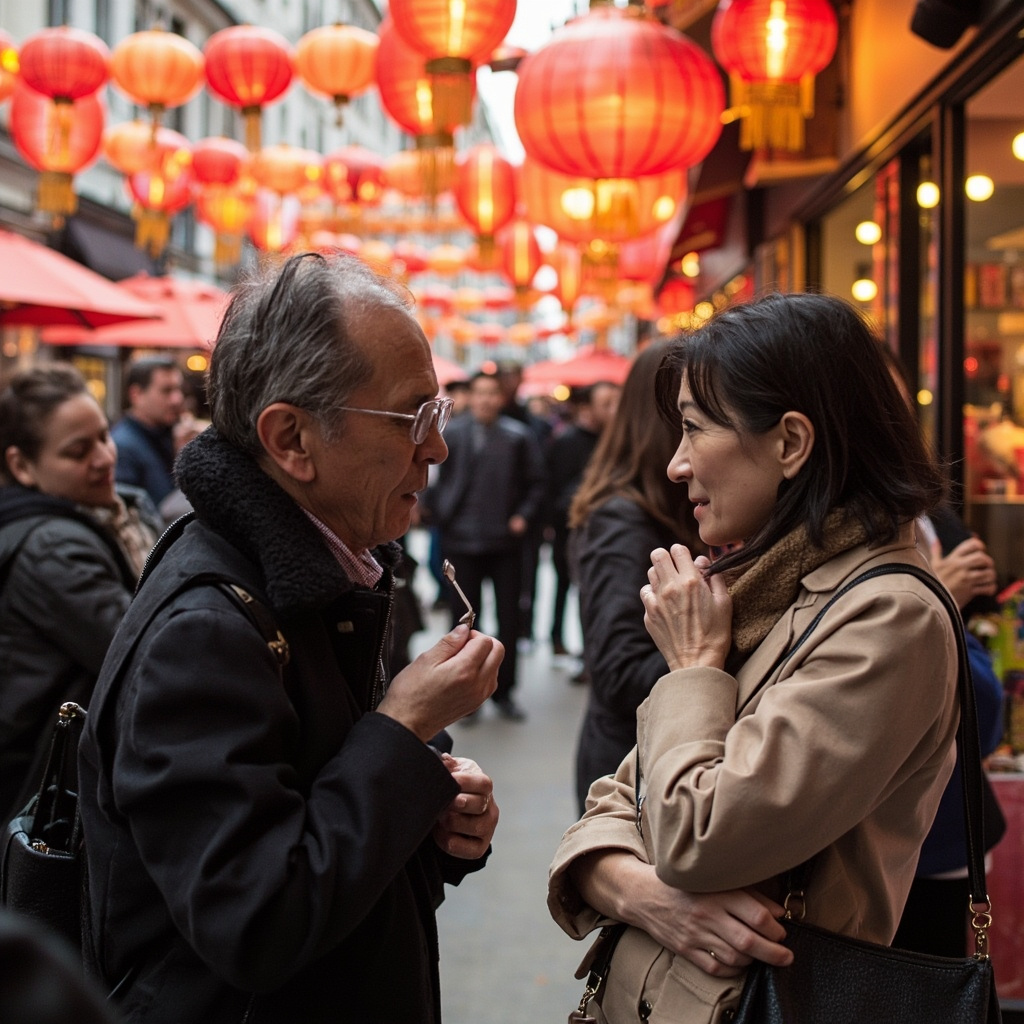
Engaging in simple Chinese festival small talk is a powerful way to show respect and build a genuine cultural connection.
Breaking the Ice During Chinese Festivals
Engaging in simple Chinese festival small talk is a powerful way to show respect and build a genuine cultural connection. Using even a few basic Mandarin phrases demonstrates your effort and appreciation for the occasion, transforming a simple greeting into a memorable and warm interaction with native speakers.
Festivals are vibrant expressions of culture, family, and community. When you attempt to use a few words in Mandarin, you are actively participating in the celebration. This small gesture shows immense respect for the traditions and the people around you, opening the door for more meaningful conversations beyond a simple "hello."
The impact of using the native language, even imperfectly, is almost always positive. It can bring a smile to someone's face and immediately makes you more approachable. This effort to bridge the language gap is the foundation of a real cultural connection, signaling that you see the festival as an important event worth honoring.
The Golden Rule: Formality and Respect
In Chinese culture, showing respect is paramount, especially during festivals. The core principle involves acknowledging hierarchy based on age and social status, which directly influences the pronouns you use and the order in which you greet people. Getting this right is a key sign of good manners and cultural awareness.
The most fundamental aspect of this is the distinction between the two words for "you":
- 您 (nín): This is the formal and polite form. Use it when addressing elders, teachers, superiors, or anyone you want to show significant respect to. Think of it as the equivalent of using "sir" or "ma'am" in English.
- 你 (nǐ): This is the informal, standard "you." It's perfectly fine for friends, colleagues of similar rank, children, and anyone younger than you. Using 你 (nǐ) with an elder can come across as overly casual or even disrespectful.
Beyond pronouns, Chinese etiquette dictates a clear hierarchy in greetings. When you enter a room or join a group, always greet the oldest or most senior person first. For example, at a family gathering, you would greet the grandparents before the parents, and the parents before your own peers or younger cousins. This simple act demonstrates your understanding and respect for the family structure.
Spring Festival: The Heavy Hitters
For Chinese New Year, the most crucial greetings focus on prosperity, happiness, and health. Mastering a few key phrases like "Gōng Xǐ Fā Cái" (wishing wealth) and "Xīn Nián Kuài Lè" (Happy New Year) will prepare you for almost any social interaction during this vibrant festival period.
The two most common Chinese New Year greetings serve slightly different purposes. 新年快乐 (Xīn Nián Kuài Lè) is the direct equivalent of "Happy New Year." It's a universal and safe greeting for everyone. 恭喜发财 (Gōng Xǐ Fā Cái), which translates to "wishing you prosperity and wealth," is also extremely popular, particularly in business settings or when exchanging red envelopes (hóngbāo).
When greeting elders or showing deeper respect, adding a wish for good health is a thoughtful gesture. 身体健康 (Shēn Tǐ Jiàn Kāng), meaning "good health," is a heartfelt and highly appreciated sentiment. We recommend combining it with a New Year greeting, for example: "Xīn Nián Kuài Lè, Shēn Tǐ Jiàn Kāng!"
Here are the most essential and easy Mandarin phrases to learn for the Spring Festival.
| Greeting Phrase | Pinyin | English Meaning & Context |
|---|---|---|
| 新年快乐 | Xīn Nián Kuài Lè | Happy New Year. The most standard and universal greeting. |
| 恭喜发财 | Gōng Xǐ Fā Cái | Wishing you prosperity. Very common, especially in southern China. |
| 身体健康 | Shēn Tǐ Jiàn Kāng | Good health. A respectful and caring wish, perfect for elders. |
| 万事如意 | Wàn Shì Rú Yì | May all go as you wish. A general blessing for good fortune. |
Mid-Autumn Festival: Mooncakes and Reunion
The essential greeting for the Mid-Autumn Festival is 中秋节快乐 (Zhōngqiū jié kuàilè), which means "Happy Mid-Autumn Festival." This holiday is a significant time for family reunion, so conversations often revolve around getting together and sharing traditional foods like mooncakes.
This greeting is the most direct and common way to share good wishes. Let's break it down:
- 中秋节 (Zhōngqiū jié): Mid-Autumn Festival
- 快乐 (kuàilè): Happy
Because the festival centers on family reunion (团圆 - tuányuán), a core cultural value, you can also engage in small talk about plans. To talk to Chinese friends, we recommend asking simple questions about their holiday activities.
- 你吃月饼吗?(Nǐ chī yuèbǐng ma?) - Are you eating mooncakes?
- 你和家人团聚吗?(Nǐ hé jiārén tuánjù ma?) - Are you getting together with your family?
Dragon Boat Festival: A Crucial Nuance
Unlike most holidays, the standard greeting for Dragon Boat Festival is not "Happy Festival" (节日快乐, Jié Rì Kuài Lè). Due to its solemn historical origins, the more appropriate and culturally aware wish is for health and well-being: 端午安康 (Duān Wǔ Ān Kāng), meaning "Wishing you peace and health on Dragon Boat Festival."
A common mistake for Mandarin learners is to apply the "Happy..." formula used for Chinese New Year, which overlooks the festival's somber background. This is one of the key cultural mistakes to avoid when extending dragon boat festival greetings. The festival commemorates the tragic death of Qu Yuan, a patriotic poet and minister who drowned himself in the Miluo River in 278 BC to protest the corruption that led to his kingdom's decline.
Because the day remembers a tragedy, wishing someone "happiness" can seem out of place. This is where the crucial distinction between two greetings comes in:
- 快乐 (Kuài Lè): This means "happy" or "joyful." It's perfect for purely celebratory events.
- 安康 (Ān Kāng): This is a deeper wish for "safety and health." 安 (ān) means safe or peaceful, and 康 (kāng) means healthy.
By wishing someone 端午安康 (Duān Wǔ Ān Kāng), you are offering a thoughtful blessing of well-being that respectfully acknowledges the festival's commemorative nature. It shows you understand the story behind the zongzi and the boat races—activities originally meant to save Qu Yuan or protect his body.
Dining and Toasting Etiquette
When dining during a Chinese festival, two essential phrases will carry you through the meal: Gān Bēi (干杯) for toasting and Màn Màn Chī (慢慢吃) to wish others an enjoyable meal. Mastering these simple expressions of Chinese dining etiquette shows respect and helps you participate confidently in the festive atmosphere.
The most important phrase for toasting in Chinese is Gān Bēi (干杯), which literally means "dry cup." It's the equivalent of "Cheers!" When someone proposes a toast, you can raise your glass and say Gān Bēi along with them. While it implies you should finish your drink, in many modern and casual settings, simply taking a sip is perfectly acceptable.
As food is served or as you begin eating, it's polite to say Màn Màn Chī (慢慢吃) to your fellow diners. This translates to "eat slowly," but its cultural meaning is closer to "Enjoy your meal" or "Bon appétit." It’s a warm and friendly gesture that shows you care about others' enjoyment of the food.
Digital Greetings: WeChat and Red Envelopes
In modern China, festival greetings have largely moved to digital platforms like WeChat, where small talk is expressed through digital red envelopes (红包, hóngbāo), vibrant stickers, and quick text abbreviations. This shift has created a unique and efficient etiquette for sharing holiday cheer with friends, family, and colleagues.
Sending Digital Red Envelopes (发红包, fā hóngbāo) The most iconic digital festival interaction is sending a digital red envelope, a feature popularized by WeChat that allows users to transfer money. While it involves real money, the focus is on the gesture of goodwill, not the amount. Sending a small, auspicious amount like 8.88 RMB or 6.66 RMB is a common way to say "Happy New Year!" or "Happy Mid-Autumn Festival!"
In group chats, it's popular to send a "lucky money" envelope where the total amount is split randomly among those who tap on it first. This gamified approach sparks lively, rapid-fire small talk as people "grab" (抢, qiǎng) the money and thank the sender.
Using Stickers (表情包, biǎoqíngbāo) Text-based greetings are often replaced entirely by stickers, known as biǎoqíngbāo. These are animated GIFs or images that convey emotions and messages far more expressively than plain text. We've observed that during holidays, a single, well-chosen animated sticker of a cartoon character holding a lantern or a firecracker can instantly convey warmth and festive cheer in a group chat. Sending a festive sticker is a perfectly acceptable—and very common—way to acknowledge a greeting or send well wishes to your entire contact list.
Short Text Abbreviations Just like in English, Mandarin digital slang uses abbreviations to speed up conversations. While you should stick to full phrases for elders or in formal contexts, you'll see these among peers:
- Pinyin Initials: Friends might shorten
新年快乐 (Xīnnián Kuàilè)toXNKL. - Playful Suffixes: Adding the character
鸭 (yā), which sounds like a cute-version of the sentence-ending particle啊 (a), makes a greeting sound more lighthearted and fun (e.g.,新年快乐鸭!). - Homophones: Using numbers that sound like words, such as
88(bā bā) for "bye-bye."
Topics to Avoid (Taboos)
To maintain a positive and auspicious atmosphere during celebrations, it's crucial to avoid topics and words associated with negativity, such as death, sickness, or financial loss. This important aspect of festive etiquette ensures conversations remain uplifting and focused on good fortune for the coming year, a core principle of Chinese conversation taboos.
We advise steering clear of the following subjects:
- Unlucky Words and Concepts: Avoid mentioning words like "death" (死 - sǐ), "sickness" (病 - bìng), or anything related to loss or ghosts. It is a common superstition that saying these words during a festival might bring them to fruition. This also extends to words that sound similar to unlucky ones, such as the number four (四 - sì), which is a homophone for "death."
- Negative News and Complaints: Chinese New Year, in particular, is about a fresh, positive start. Bringing up bad news, personal problems, or complaining about work or life can dampen the celebratory mood. The focus should be on optimism and looking forward to a prosperous year.
- Financial Difficulties: Discussing debt or financial struggles is considered inappropriate. Festivals are a time for celebrating abundance and prosperity, so conversations about money should be framed positively, such as wishing someone wealth and success.
Conclusion: It’s the Thought That Counts
When engaging in Chinese festival small talk, remember that your genuine effort to connect is far more valuable than perfect pronunciation. People will appreciate your willingness to participate in their culture, which is a powerful way to build lasting relationships and show respect for their traditions.
Don't let the fear of making a mistake hold you back. Native speakers are usually very encouraging and will be delighted that you are trying to speak their language. Your effort is a sign of respect that transcends minor errors. Each attempt, no matter how small, will build your confidence for the next conversation.
Ultimately, using these phrases is about more than just words; it's about connection. By making an effort, you show a sincere interest in building relationships and learning Chinese culture. This simple gesture can turn a brief holiday greeting into a meaningful interaction and a warm memory.
Q: What is the easiest Chinese greeting for any festival?
A: ### What is the easiest Chinese greeting for any festival? The most versatile and easiest Chinese greeting for any festival is 节日快乐 (jié rì kuài lè), which literally translates to "Festival Happy." This universal phrase is a safe and polite choice for any celebration, from the Spring Festival to the Dragon Boat Festival, especially if you're unsure of the specific holiday greeting.
This phrase is a perfect go-to for a few key reasons:
- It's a "one-size-fits-all" greeting. You don't need to memorize a different phrase for every holiday.
- It's always correct. While more specific greetings exist, using this general one is never wrong and always shows thoughtful sentiment.
The phrase is composed of two simple parts:
- 节日 (jié rì): Festival / Holiday
- 快乐 (kuài lè): Happy / Joyful
While 节日快乐 is the perfect catch-all, as you become more familiar with the culture, you can use more specific greetings. For example, you would say 新年快乐 (xīn nián kuài lè) for Chinese New Year or 中秋快乐 (zhōng qiū kuài lè) for the Mid-Autumn Festival. But when in doubt, 节日快乐 is your best and easiest option.
Q: Is it rude if I mispronounce a Chinese greeting?
A: Generally, no, it is not considered rude if you mispronounce a Chinese greeting. Native speakers appreciate the effort and understand that Mandarin is a tonal language that is challenging for learners. Your sincerity in trying to connect with their culture will almost always outweigh any minor pronunciation errors.
The key is the intention behind your words. When you attempt to say a festival greeting like "Xīnnián kuàilè" (新年快乐) for Chinese New Year, your effort is seen as a sign of respect and friendliness. Most people will be pleased and encouraging, not offended.
If your pronunciation is unclear, the listener might be momentarily confused, but they will likely understand what you mean based on the festive context. They may even offer a gentle and helpful correction, which you should view as a positive learning opportunity. Don't let the fear of making a mistake prevent you from participating; a warm smile accompanying your attempt will make your good intentions clear.
Q: What should I say when receiving a Red Envelope (Hongbao)?
A: ### What should I say when receiving a Red Envelope (Hongbao)?
When receiving a red envelope (红包, hóngbāo), the most important response is to express sincere gratitude and offer a festive greeting in return. You should say "谢谢" (xièxie) for "thank you," followed by a holiday-specific well-wish. Always accept the envelope with both hands to show respect.
Proper etiquette involves a few simple steps. Here are the key phrases and actions to remember:
- Accept with Both Hands: This is a sign of respect and gratitude in Chinese culture.
- Say Thank You and Offer a Blessing: Combine a thank you with a relevant festive greeting. For elders, using the polite "you" (您, nín) is recommended.
- Do Not Open It Immediately: It is considered impolite to open the red envelope in front of the person who gave it to you. Wait until you are in private.
Here are some essential phrases you can use:
| Mandarin Phrase | Pinyin | English Meaning |
|---|---|---|
| 谢谢 | xièxie | Thank you |
| 谢谢您 | xièxie nín | Thank you (polite form, for elders) |
| 新年快乐 | xīn nián kuài lè | Happy New Year |
| 恭喜发财 | gōng xǐ fā cái | Wishing you wealth and prosperity |
| 祝您身体健康 | zhù nín shēn tǐ jiàn kāng | Wishing you good health (formal, for elders) |
Example Interaction:
When an elder hands you a red envelope, you can receive it with both hands and say:
谢谢您!祝您新年快乐,身体健康! (Xièxie nín! Zhù nín xīn nián kuài lè, shēn tǐ jiàn kāng!) Thank you! I wish you a Happy New Year and good health!
Q: Why shouldn't I say 'Happy Dragon Boat Festival'?
A: While "happy" (快乐, kuàilè) is a standard greeting for most holidays, it's traditionally avoided for the Dragon Boat Festival due to its somber origins. The festival commemorates the tragic death of the patriotic poet Qu Yuan, so wishing someone "happiness" can be seen as inappropriate. A more culturally respectful greeting is to wish them "peace and health" (安康, ānkāng).
The historical context is key. The Dragon Boat Festival (端午节, Duānwǔ Jié) remembers Qu Yuan, a loyal minister and poet who drowned himself in a river to protest corruption. The festival's main activities—dragon boat racing and eating zongzi (sticky rice dumplings)—are said to originate from the efforts of local people to search for his body and to drop rice into the water to prevent fish from eating it. Because of this memorial nature, the holiday carries a tone of remembrance and solemnity, not pure celebration.
The more appropriate and traditional greeting is:
- 端午安康 (Duānwǔ ānkāng) — Wishing you peace and health on Dragon Boat Festival.
It's worth noting that in modern times, especially in mainland China and among younger people, you may hear 端午节快乐 (Duānwǔ Jié kuàilè). However, using 安康 (ānkāng) is always the safer and more thoughtful choice, as it demonstrates a deeper understanding of the festival's cultural significance.
Explore Chinese Culture
Discover practical guides, cultural insights, and tips for celebrating Chinese festivals with confidence and respect.
Start Learning →Recent Posts
Check out our latest articles
In Chinese business culture, holidays are not just breaks from work; they are critical opportunities to strengthen professional connections.
Chinese birthday traditions are deeply rooted in the concept of longevity and respect for elders,
The Chinese Ghost Festival, also known as the Hungry Ghost Festival, is a traditional holiday rooted in ancestor worship
The Dragon Boat Festival, known in Mandarin as the Duanwu Festival (端午节), is a major traditional holiday celebrated in China and across East Asia
The Mid-Autumn Festival is a traditional harvest celebration that falls on the 15th day of the 8th month of the lunar calendar.
The Lantern Festival, known as Yuanxiao Jie (元宵节), is a vibrant Chinese festival celebrated on the 15th day of the first lunar month