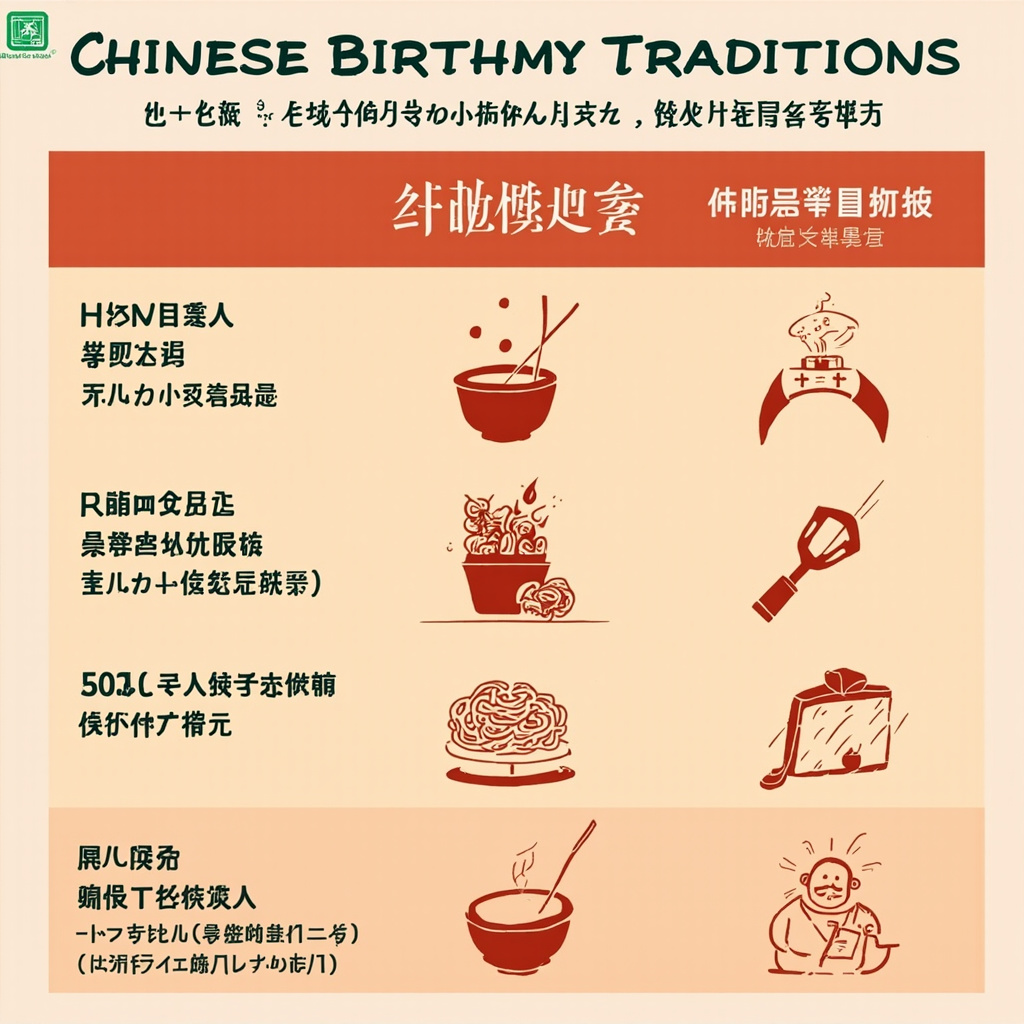
Chinese birthday traditions are deeply rooted in the concept of longevity and respect for elders,
Understanding Chinese Birthday Traditions
Chinese birthday traditions are deeply rooted in the concept of longevity and respect for elders, focusing on family gatherings and symbolic foods. This contrasts sharply with Western customs, which typically emphasize individual celebration with parties, gifts, and cake. While a Western birthday might involve a large group of friends and presents, traditional Chinese celebrations are often more intimate, centered on the family unit.
The fundamental cultural difference lies in the focus: in China, a birthday is less about celebrating another year of an individual's life and more about honoring their journey and expressing a collective hope for continued health and a long life. This emphasis on longevity shapes every aspect of the celebration, from the food served to the taboos observed. We see this philosophy woven into customs that prioritize respect for elders and family harmony over individual-centric festivities.
The Significance of Longevity Noodles (Changshou Mian)
Longevity noodles, or changshou mian (长寿面), are perhaps the most iconic food in Chinese birthday traditions, symbolizing the wish for a long, healthy, and prosperous life. This dish consists of a single, exceptionally long noodle served in a savory broth, where the unbroken length of the noodle directly represents the continuity of one's life.
The symbolism is straightforward but powerful: the longer the noodle, the longer the life. For this reason, the preparation and consumption of changshou mian are governed by strict eating etiquette. A common mistake for those unfamiliar with the custom is to cut or bite the noodle in mid-slurp. This is considered a major taboo, as it symbolically represents cutting one's life short. The proper way to eat longevity noodles is to slurp the entire strand into your mouth without breaking it, a fun and sometimes challenging feat that adds to the celebratory atmosphere.
While the noodle itself is the star, it's typically served in a rich broth, often made from chicken or pork. Common accompaniments include a hard-boiled egg, symbolizing fertility and a new beginning, and green vegetables like bok choy to represent youth and vitality. The entire bowl is a culinary blessing, with each ingredient adding a layer of good fortune for the year ahead.
Early Milestones: Red Eggs and Ginger
In Chinese culture, the first major life celebrations occur long before the annual birthdays common in the West. The Full Moon celebration and the first birthday are pivotal events, marked by unique rituals and symbolic foods like red eggs and ginger, which announce the baby's arrival and offer blessings for their future.
The first significant milestone is the Full Moon celebration, or Mǎnyuè (满月), which takes place when the baby turns one month old. Historically, this was a crucial benchmark, signifying that the infant had survived the most vulnerable period of its life. To announce the good news, parents distribute hard-boiled eggs dyed bright red to friends and family. The red eggs and ginger are rich with symbolism:
- Red Eggs: The color red represents happiness and good fortune. The egg itself symbolizes new life and fertility, while its round shape signifies harmony and unity.
- Ginger: Pickled ginger is often served alongside the eggs, with its sharp flavor believed to restore the mother's strength after childbirth.
A year later, the child’s first birthday is marked by a fascinating custom called Zhuāzhōu (抓周), or the "first-year grab." During this ceremony, a variety of objects are placed in front of the baby. The item the child chooses to grab is believed to foretell their future path or personality. For example, grabbing a book might suggest a future scholar, a coin could point to wealth, and a paintbrush might indicate an artist. This tradition adds a layer of hopeful prediction to the celebration, a distinct contrast to the Western first birthday party, which focuses more on gifts and cake.
The 60th Birthday: Completing the Cycle
In traditional Chinese culture, the 60th birthday is the most important milestone an individual can reach. It represents the completion of one full sexagenary cycle in the Chinese calendar, symbolizing a rebirth and the attainment of wisdom, making it a profound moment for celebration and reflection.
The significance of this birthday is rooted in the traditional Chinese zodiac cycle. This system combines the 12 Earthly Branches (the zodiac animals) with the 10 Heavenly Stems (linked to the five elements). Since the least common multiple of 10 and 12 is 60, a person’s specific birth combination of stem and branch only repeats once every 60 years. Reaching this point, known as huājiǎ (花甲), signifies having experienced a full cycle of life, thus earning a unique level of respect.
This milestone is a pivotal occasion for children and grandchildren to express filial piety (孝, xiào), a core Confucian value of deep respect for one's parents and elders. Families typically host grand celebrations, often in the form of a large banquet, to honor the elder. These events are not just parties but public demonstrations of gratitude for the elder's life, sacrifices, and contributions to the family. The scale of the celebration often reflects the family's reverence and prosperity.
Subsequent birthdays, such as the 70th and 80th, are also celebrated with great enthusiasm, but the 60th remains the foundational milestone that marks the transition into respected seniority within the family and community.
Calculating Age: Lunar vs. Solar
In the West, age is calculated from one's date of birth using the solar calendar, but traditional Chinese nominal age starts a person at one year old at birth and adds another year with each passing Lunar New Year. This system, known as xūsuì (虛歲), can result in someone being one or two years "older" than their Western age.
The concept of Chinese nominal age begins by counting the time in the womb as the first year of life. Therefore, a baby is considered one year old the moment they are born. The second key difference is that everyone traditionally turns a year older on the same day: the first day of the Lunar New Year. This means a baby born just days before the Lunar New Year would be considered two years old shortly after birth—one year for being born and a second for the new year's arrival.
This traditional method is rooted in the lunar calendar, which tracks the phases of the moon. While modern, official life in China operates on the Gregorian solar calendar (like the West), many families still acknowledge birthdays based on the lunar date. This is why the Gregorian date for a person's traditional birthday celebration can change from year to year.
China vs. West: A Cultural Comparison
When we compare Chinese birthday traditions to Western ones, the core difference lies in their cultural focus: Western customs often celebrate the individual's personal milestone, whereas Chinese traditions emphasize family respect, collective well-being, and wishes for longevity. This fundamental divergence in values shapes everything from the food served to the atmosphere of the celebration.
The contrast between a Western birthday cake and Chinese longevity noodles is perhaps the most telling symbol. The birthday cake is a centerpiece for a party, a sweet treat shared among friends to mark another year of personal growth. In contrast, longevity noodles represent a heartfelt wish from the family for a long and healthy life, with their unbroken length symbolizing an uninterrupted existence. This highlights the broader cultural comparison: the West's focus on individual happiness versus China's emphasis on familial duty and auspiciousness.
Here is a summary of the key differences:
| Aspect | Western Custom | Traditional Chinese Custom |
|---|---|---|
| Core Focus | Celebration of the individual; personal achievement. | Respect for elders; family unity and longevity. |
| Symbolic Food | Birthday cake with candles. | Longevity noodles (长寿面), peaches, and red eggs. |
| Food Symbolism | Sweetness, a celebratory treat. | Long life, prosperity, and new beginnings. |
| Party Atmosphere | Often large parties with friends, music, and games. | Typically a family-centric meal or banquet. |
| Key Milestones | 16th, 18th, 21st birthdays. | 60th birthday (start of a new life cycle), 1st birthday. |
| Gifting | Wrapped presents tailored to the individual's interests. | Red envelopes (红包, hóngbāo) with money; practical gifts. |
| Underlying Value | Individualism and personal expression. | Collectivism, filial piety, and auspiciousness. |
Gift-Giving Taboos and Superstitions
Navigating Chinese gift-giving etiquette requires avoiding items with unlucky symbolism, as certain gifts are considered major cultural faux pas due to negative associations. The most critical Chinese birthday taboos involve objects whose names sound like words for death or are directly linked with funerals, making them highly inappropriate for a celebration of life.
From our observations of cultural exchange forums, we notice that the fear of committing a gift-giving faux pas is a common source of anxiety for Westerners attending a Chinese birthday celebration for the first time. Understanding these taboos is key to showing genuine respect.
The most well-known prohibition is against giving clocks. In Mandarin, the phrase "to give a clock" (送鐘, sòng zhōng) is a perfect homophone for "to attend a funeral rite" or "to see someone off to their end" (送終, sòng zhōng). Giving a clock, therefore, implies you are wishing death upon the recipient, making it an extremely offensive gesture. This taboo extends to watches for older individuals, though it is often less strict for younger generations.
Another significant taboo involves items associated with mourning. White flowers, particularly chrysanthemums, are reserved for funerals and should never be given as a birthday gift. Similarly, gifts like handkerchiefs are inappropriate as they symbolize wiping away tears and are associated with saying a final goodbye.
Finally, the number four is carefully avoided. The word for "four" (四, sì) sounds nearly identical to the word for "death" (死, sǐ). Consequently, gifts should not be given in sets of four. This superstition also affects how money is given in red envelopes; amounts containing the number four, such as 40 or 400, are strictly avoided.
Modern Adaptations in China
Today’s celebrations in China beautifully showcase a blend of old and new, as younger generations embrace Western customs while still honoring their heritage. We see a vibrant fusion culture where Western-style birthday cakes, complete with candles and the "Happy Birthday" song, have become a central part of the festivities for many.
This Western influence, however, rarely replaces tradition entirely. It is common for a modern Chinese birthday to feature both a festive cake party with friends and a more traditional family meal. In these settings, the custom of eating a bowl of longevity noodles is often proudly upheld, ensuring the symbolic wish for a long and healthy life remains a cornerstone of the celebration. This dual approach allows people to participate in global trends without losing touch with their cultural roots.
Q: Why should you not cut longevity noodles?
A: ### Why should you not cut longevity noodles?
In Chinese birthday traditions, cutting longevity noodles (长寿面, cháng shòu miàn) is a significant taboo because it symbolizes cutting the thread of life short. These extra-long noodles represent a long, healthy, and prosperous life for the birthday person, so breaking or cutting them is considered extremely unlucky and a bad omen.
The entire tradition is built on powerful symbolism. Each long, continuous strand of noodle represents the birthday person's lifeline. To receive the full blessing of longevity, one should try to eat each noodle by slurping it up from the bowl without biting it in half. The goal is to keep the noodle intact for as long as possible. Severing the noodle before it is entirely in your mouth is akin to severing the good fortune and long life it represents. This custom highlights the deep cultural importance placed on auspicious symbols and avoiding negative actions during important celebrations.
Q: Why is giving a clock a taboo in Chinese culture?
A: ### Why is giving a clock a taboo in Chinese culture?
Giving a clock as a gift is a major taboo in Chinese culture because the phrase for "giving a clock" sounds identical to the phrase for "attending a funeral." This unfortunate linguistic coincidence associates the gift with death and the end of life, making it an extremely unlucky and offensive gesture.
The core of this taboo lies in a homophone—words that sound the same but have different meanings.
- Giving a clock (送鐘, sòng zhōng)
- Attending a funeral rite or seeing someone off to their end (送終, sòng zhōng)
Because the pronunciation is identical, the act of giving a clock carries the morbid implication of wishing for the recipient's time to run out. This is considered particularly offensive when the gift is for an elderly person.
Interestingly, this taboo typically applies to wall clocks and desk clocks. Giving a watch (手表, shǒubiǎo) is generally acceptable because the Mandarin word for it is completely different and does not carry the same negative connotation. This is a prime example of how wordplay and symbolism are deeply embedded in Chinese traditions and social etiquette.
Q: Do Chinese people eat birthday cake?
A: ### Do Chinese people eat birthday cake? Yes, eating birthday cake is now a very common practice in China, especially among younger generations and in urban areas, due to the adoption of Western customs. However, the most traditional and symbolically important birthday food is not cake but "longevity noodles" (长寿面, chángshòu miàn), representing a wish for a long life.
The quintessential Chinese birthday meal features a bowl of longevity noodles. Ideally, these are served as one single, unbroken strand to symbolize the continuity of life. It is considered bad luck to cut the noodle while eating, as this could metaphorically "cut life short."
While noodles hold deep cultural significance, birthday cake has become a popular addition for its festive appeal. It's common for a modern celebration to incorporate both traditions:
- Longevity Noodles: Often eaten with family to honor tradition and receive blessings for a long, healthy life.
- Birthday Cake: Shared among friends at a party, complete with candles and the "Happy Birthday" song, much like in the West.
Other traditional birthday foods include red-dyed eggs, symbolizing happiness and new life, and longevity peaches (寿桃, shòutáo)—steamed buns shaped like peaches, which are a powerful symbol of immortality in Chinese folklore. Today, many celebrations harmoniously blend these customs, enjoying a slice of cake after a traditional bowl of noodles.
Q: What is special about the 60th birthday in China?
A: ### What is special about the 60th birthday in China?
The 60th birthday is a monumental milestone in Chinese culture, marking the completion of one full sexagenary cycle in the traditional calendar. Known as huājiǎ (花甲), this event symbolizes the beginning of a new life cycle and is celebrated with great respect, honoring the individual's wisdom and longevity.
This significance stems from the traditional Chinese calendar, which operates on a 60-year cycle created by combining two sets of characters: the ten Heavenly Stems (天干) and the twelve Earthly Branches (地支). When a person turns 60, they have lived through every combination and have returned to the specific stem-branch designation of their birth year. This completion of a full cycle is seen as a major life achievement.
Key aspects of a 60th birthday celebration include:
- A Grand Banquet: The celebration is typically a large feast hosted by the children to show filial piety (孝, xiào) and gratitude.
- Symbolic Foods: Longevity noodles and longevity peaches (寿桃, shòutáo), which are steamed buns shaped and colored like peaches, are essential dishes symbolizing the wish for a long and healthy life.
- Honoring the Elder: It is a time for the entire family to gather and pay respect to the elder. Younger generations offer blessings and well-wishes for continued health and happiness.
Explore Chinese Culture
Discover practical guides, cultural insights, and tips for celebrating Chinese festivals with confidence and respect.
Start Learning →Recent Posts
Check out our latest articles
Engaging in simple Chinese festival small talk is a powerful way to show respect and build a genuine cultural connection.
In Chinese business culture, holidays are not just breaks from work; they are critical opportunities to strengthen professional connections.
The Chinese Ghost Festival, also known as the Hungry Ghost Festival, is a traditional holiday rooted in ancestor worship
The Dragon Boat Festival, known in Mandarin as the Duanwu Festival (端午节), is a major traditional holiday celebrated in China and across East Asia
The Mid-Autumn Festival is a traditional harvest celebration that falls on the 15th day of the 8th month of the lunar calendar.
The Lantern Festival, known as Yuanxiao Jie (元宵节), is a vibrant Chinese festival celebrated on the 15th day of the first lunar month