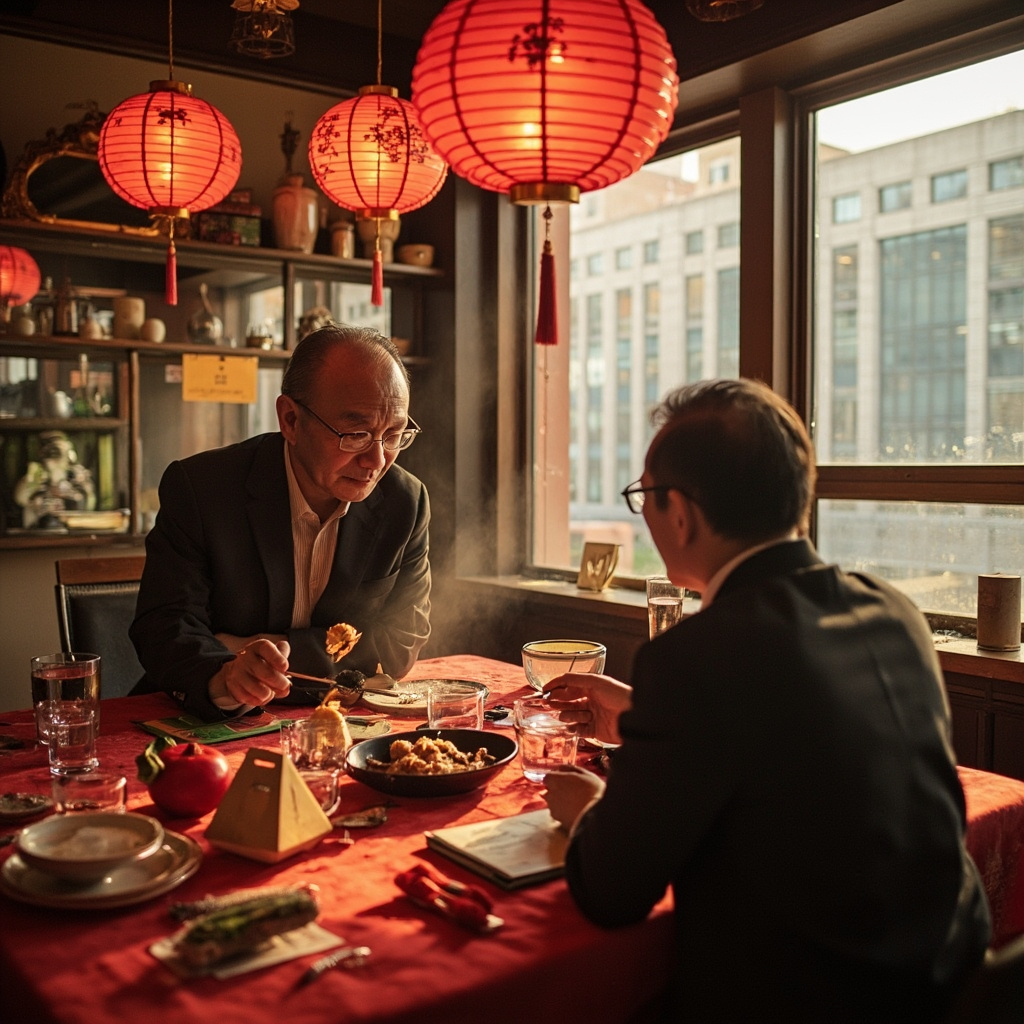
In Chinese business culture, holidays are not just breaks from work; they are critical opportunities to strengthen professional connections.
The Role of Holidays in Chinese Business Relationships
In Chinese business culture, holidays are not just breaks from work; they are critical opportunities to strengthen professional connections. This practice is deeply tied to the concept of guanxi, where showing cultural respect through greetings and gifts directly influences the health and longevity of your business partnerships.
At the heart of Chinese professional life is the concept of guanxi (关系). Often translated as "relationships" or "connections," guanxi is more accurately described as a dynamic network of mutual trust, obligation, and goodwill built over time. It is the invisible currency that underpins successful business relationships, influencing everything from negotiations to conflict resolution. Unlike simple networking, guanxi is a long-term investment in people.
Major holidays like Chinese New Year and Mid-Autumn Festival are prime opportunities to nurture guanxi. By extending well-wishes or sending appropriate corporate gifts, you demonstrate cultural respect and show that you value your partners beyond the confines of a contract. These gestures are not seen as mere formalities; they are meaningful actions that acknowledge the importance of the personal connection within the professional one.
Consistently observing holiday etiquette is a powerful way to build and maintain strong guanxi. A well-established network can lead to smoother collaborations, increased loyalty, and preferential treatment in future dealings. Conversely, overlooking these cultural touchpoints can be interpreted as a lack of interest or respect, potentially weakening the foundation of your long-term business partnerships.
Key Holidays for the Corporate Calendar
For international business, the most critical Chinese public holidays to monitor are Chinese New Year and National Day, both triggering week-long "Golden Week" closures that halt most operations. Mid-Autumn Festival and Dragon Boat Festival are also significant, impacting schedules and corporate gifting, though with shorter official breaks.
Understanding the business impact of these key dates is crucial for managing project timelines, supply chains, and client relationships. Below is a breakdown of the major holidays that affect office closure dates and require professional attention.
| Holiday | Typical Dates | Business Impact / Office Closure | Corporate Gifting Expectation |
|---|---|---|---|
| Chinese New Year (Spring Festival) | Late Jan – Mid Feb | Very High: The most important holiday. Official 7-day break, but many offices close for 10-15 days. Expect major business disruption. | High: Gifts for partners and employees are common. Red envelopes (hóngbāo) are traditional. |
| National Day (Golden Week) | Oct 1st | High: A 7-day mandatory holiday creating a second "Golden Week." Significant impact on Golden Week business and logistics. | Moderate: Less emphasis on gifting than CNY, but small tokens of appreciation can be well-received. |
| Mid-Autumn Festival | Sept – Oct | Medium: Typically a 3-day public holiday. A key time for relationship-building. | High: Mooncakes are the quintessential gift and are widely exchanged between companies and with employees. |
| Dragon Boat Festival | June | Medium: A 3-day public holiday. Business impact is moderate. | Low to Moderate: Gifting is less prevalent than for CNY or Mid-Autumn, but exchanging zongzi (sticky rice dumplings) is a common gesture. |
Communication Channels: WeChat vs. Email
While formal business email etiquette still holds its place, especially for international correspondence, WeChat is the undisputed champion for daily and festive communication within the Chinese holiday office landscape. Email is reserved for official announcements and initial contacts, whereas WeChat is the primary tool for instant, personal greetings that build and maintain crucial business relationships.
When to Use Business Email
In the context of a Chinese holiday, email serves as the official, formal channel. Its use is strategic and reserved for specific scenarios:
- Formal Announcements: Use email to send official company-wide notices about holiday schedules, office closures, and return-to-work dates. The subject line should be clear, such as "Important: [Company Name] 2024 Chinese New Year Holiday Schedule."
- International & New Contacts: For partners, clients, or prospects outside of China, or for domestic contacts with whom you do not yet have a WeChat connection, email is the default professional choice. It avoids the perceived forwardness of requesting a personal chat connection too early.
- Detailed Greetings: If your greeting includes a formal company statement, a review of the past year's partnership, or detailed well-wishes, the email format is more appropriate than an instant message.
Response expectations for holiday emails are slower. A reply is not considered urgent, and responding upon return to the office is perfectly acceptable.
When to Use WeChat
WeChat for business is less about formal transactions and more about relationship cultivation (guanxi). During holidays, it becomes the primary vehicle for demonstrating personal goodwill.
- Instant Greetings: A simple, warm greeting sent via direct message on Chinese New Year's Eve or New Year's Day is standard practice for established contacts. This is where
messaging timingis critical; a well-timed message shows you are thinking of them during the festival. - Relationship Building: Sending a festive sticker, a short personalized message, or a digital red packet (hóngbāo) are powerful, low-effort ways to strengthen connections.
- General Announcements: Posting a festive graphic and a general greeting to your "Moments" (similar to a Facebook wall) is a great way to send well-wishes to your entire professional network at once.
The speed of response on WeChat is much faster. Greetings are often exchanged in near real-time, and a prompt "Thank you, you too!" or a reciprocal greeting is expected.
From our system's perspective, we often observe users preparing two distinct sets of holiday templates: formal, detailed ones for email distribution and shorter, more graphic-rich ones specifically for WeChat moments or direct messages. This highlights the practical separation between the two channels.
Timing Your Greetings Appropriately
For maximum impact, we recommend sending your professional holiday greetings one to two business days before the office officially closes. This strategic greeting timing ensures your message is seen before the holiday chaos begins and is not lost among the flood of personal messages on the holiday itself.
Here’s how to approach the timing for best results:
-
Send Before the Office Closes: The most professional approach is to send a pre-holiday message on the last or second-to-last workday before a major holiday like Chinese New Year or Golden Week. This shows foresight and respect for your contact's time, allowing them to read and acknowledge your well-wishes while still in a business mindset.
-
Avoid the CNY Eve Rush: On Chinese New Year's Eve, in particular, personal phones are inundated with hundreds of greetings from family and friends. A business message sent during this CNY eve rush is highly likely to be overlooked, perceived as automated spam, or simply buried in a sea of notifications. Sending your message earlier ensures it stands out.
-
Remember Time Zone Considerations: When working with partners in China, always be mindful of their local time zone (China Standard Time, UTC+8). A well-timed message should arrive during their business hours, not yours. Sending a greeting that lands in their inbox at 3 AM is far less effective than one that arrives mid-morning when they are actively working.
Standard Business Greeting Templates
For professional correspondence, using the right Chinese business greetings is crucial during major holidays. We have compiled versatile, copy-pasteable email templates with key Mandarin phrases for work, focusing on universal wishes like prosperity and health for Chinese New Year and Mid-Autumn Festival, ensuring your messages are culturally respectful.
Chinese New Year / Spring Festival (春节 - chūn jié)
This is the most important holiday. Greetings focus heavily on prosperity, health, and success for the coming year. While "Happy New Year" (新年快乐 - xīn nián kuài lè) is standard, incorporating more specific wishes shows greater cultural awareness.
-
Key Phrases:
- For Prosperity: 恭喜发财 (gōng xǐ fā cái) - Wishing you happiness and prosperity. This is the most famous and widely used greeting.
- For Health: 身体健康 (shēn tǐ jiàn kāng) - Wishing you good health. This is a sincere and highly valued wish, especially for more senior contacts.
- For Business Success: 生意兴隆 (shēng yì xīng lóng) - May your business flourish. This is perfect for B2B communications.
-
Sample Email Template:
- Subject: 新年快乐! (xīn nián kuài lè!)
- Body:
- Dear [Client/Partner Name],
- As the Lunar New Year approaches, we extend our warmest wishes to you and your team for a successful and prosperous year ahead.
- 祝您和您的团队 (zhù nín hé nín de tuán duì):
- 恭喜发财 (gōng xǐ fā cái)
- 身体健康 (shēn tǐ jiàn kāng)
- We look forward to our continued partnership.
Mid-Autumn Festival (中秋节 - zhōng qiū jié)
This holiday centers on family reunion and harvest. Greetings are generally warm and focus on happiness and togetherness.
-
Key Phrases:
- Standard Greeting: 中秋快乐 (zhōng qiū kuài lè) - Happy Mid-Autumn Festival.
- For Family & Harmony: 花好月圆 (huā hǎo yuè yuán) - "Blooming flowers and a full moon." This is a poetic way to wish someone a perfect, happy family life, and it is very appropriate in a business context.
-
Sample Email Template:
- Subject: 中秋快乐! (zhōng qiū kuài lè!)
- Body:
- Dear [Colleague/Client Name],
- On the occasion of the Mid-Autumn Festival, we wish you and your family joy and happiness.
- 祝您中秋快乐,花好月圆。(zhù nín zhōng qiū kuài lè, huā hǎo yuè yuán.)
- We hope you enjoy this special time of celebration.
Professional Sign-Offs
In a holiday email, you can replace a standard "Best regards" with a festive closing. Alternatively, you can add the holiday wish just before your standard sign-off.
- 祝好 (zhù hǎo): A versatile and common closing that means "Wishing you well." It works year-round but is also a warm way to end a holiday message.
- 此致敬礼 (cǐ zhì jìng lǐ): A very formal closing, similar to "Yours sincerely" or "With highest regards." Use this for official communications or when addressing high-level contacts.
Example Combination:
...[Main body of your email]...
祝您节日快乐! (zhù nín jié rì kuài lè!) - Wishing you a happy holiday!
祝好 (zhù hǎo), [Your Name]
Corporate Gifting Protocols
Navigating corporate gifting in China involves balancing modesty with quality, adhering to strict presentation standards, and understanding the principle of reciprocity. The ideal business gift is thoughtful but not extravagant, beautifully wrapped in auspicious colors like red and gold, and given with the expectation of strengthening long-term relationships rather than immediate gain.
When selecting corporate gifts in China, value is a critical consideration. While the gift should be of good quality to reflect respect, it must not be so expensive as to be perceived as a bribe. Many companies have strict anti-corruption policies, so adhering to these business gifting rules is paramount. We advise opting for high-quality, tasteful items like premium tea, fine stationery, or company-branded merchandise rather than lavish personal luxuries. The goal is to express appreciation, not to create a sense of obligation or violate compliance regulations.
The presentation of a gift is often as important as the gift itself. Proper gift wrapping etiquette is non-negotiable.
- Colors: Use wrapping paper in red and gold, as these colors symbolize luck, happiness, and wealth. Avoid using white, black, or blue, which are associated with mourning.
- Presentation: Always present and receive a gift with both hands. This gesture shows respect and sincerity. It is also polite for the recipient to initially decline the gift a few times before accepting, so a gentle insistence is appropriate.
Gifting in Chinese business culture operates on the principle of reciprocity, known as lǐ shàng wǎng lái (礼尚往来). This means that a gift given will likely be returned with one of similar value in the future. This is not a transactional tally but a fundamental part of building and maintaining balanced, long-term relationships (guanxi). When you give a gift, you are investing in the relationship, and you should graciously accept a gift in return when one is offered.
Taboo Gifts to Avoid
In Chinese holiday office settings, a well-intentioned gift can inadvertently cause offense if it carries negative cultural symbolism. Navigating these gift taboos is critical for maintaining positive business relationships, as the symbolic meaning of an item often outweighs its monetary value. Avoiding these unlucky gifts demonstrates respect and cultural awareness.
A common mistake we see professionals make is gifting a beautiful, expensive clock, assuming it's a sophisticated corporate present. Unfortunately, this is one of the most significant cultural mistakes one can make. Due to linguistic homophones, certain gifts carry heavy, undesirable meanings. To protect your professional relationships, we advise steering clear of the following items.
| Unlucky Gifts to Avoid | The Hidden Negative Meaning (Why It's a Cultural Mistake) |
|---|---|
| Clocks (钟, zhōng) | The phrase for "gifting a clock" (送钟, sòng zhōng) sounds identical to "attending a funeral rite" (送终, sòng zhōng), implying you are wishing death upon the recipient. |
| Umbrellas (伞, sǎn) | The Mandarin word for umbrella sounds like 散 (sàn), which means "to break up" or "to scatter." Giving an umbrella suggests you wish to end the relationship. |
| Green Hats (绿帽子, lǜ màozi) | Gifting a green hat is a grave insult. The phrase "to wear a green hat" is a common idiom meaning a man's wife or partner is cheating on him. |
| Sharp Objects (e.g., knives, scissors) | Giving any sharp object implies you want to sever the friendship or business relationship, as if "cutting ties." |
| Black or White Wrapping Paper | The colors black and white are traditionally associated with funerals and mourning in Chinese culture. Using them for gift wrapping is considered highly inappropriate and unlucky. |
Navigating the 'Hongbao' (Red Envelope) in Business
In a Chinese holiday office context, the hongbao (红包) is a customary cash gift from a boss to an employee, but it carries significant corruption risks when exchanged between clients and vendors. Modern digital versions, like the WeChat red packet, have emerged as a popular, low-risk way to share small, celebratory amounts.
We break down the three primary scenarios for business-related cash gifts:
-
From Boss to Employee (Expected): The most common and appropriate use of a hongbao is from an employer to their staff. Often given before a major holiday like Chinese New Year, this cash gift frequently serves as a
year-end bonusor a sign of appreciation. This is a hierarchical gesture that flows from senior leadership down to employees and is a critical part of maintaining morale. -
Between Client and Vendor (High Risk): We strongly advise against giving cash hongbao to clients, government contacts, or key vendor representatives. Due to China's strict anti-corruption laws, a cash gift can easily be perceived as a bribe, creating serious legal and reputational risks. To show appreciation in a B2B relationship, stick to official, non-cash corporate gifts of modest value.
-
The Digital
WeChat Red Packet(Low Risk): A modern evolution ofHongbao etiquetteis theWeChat red packet(微信红包). These digital transfers involve very small, often randomized amounts of money sent through the popular messaging app. Sending a small digital packet into a team or client group chat is a fun, casual, and transparent way to share holiday goodwill without the formality or risk of a physical cash envelope.
Understanding 'Make-up Workdays'
China's holiday system creates longer breaks by designating specific weekend days as official make-up workdays. This practice involves swapping a weekend day with a weekday adjacent to a public holiday, effectively shifting the work schedule to create an extended period of time off for major festivals.
This system of an adjusted weekend has a significant impact on international business operations. A common mistake is assuming that Saturdays and Sundays are always non-working days in China. During these periods, your Chinese colleagues may be required to work on a weekend day to compensate for an extended holiday break. Conversely, they will be unavailable on a weekday that has been designated as part of the holiday block, which can disrupt project timelines if not anticipated.
To avoid scheduling conflicts, we strongly advise against relying on a standard calendar. Always check the official China holiday schedule released annually by the State Council's General Office. This is the definitive source for identifying which specific weekend days have been converted into workdays, ensuring you can plan meetings and deadlines accurately with your Chinese partners.
Summary of Best Practices
Successfully navigating Chinese holiday office etiquette boils down to three core principles: planning ahead, showing cultural sensitivity, and choosing the right communication channels. Following these best practices ensures your holiday greetings and corporate gifts strengthen professional relationships and convey genuine respect to colleagues and business partners in China.
This etiquette summary provides a final checklist for your holiday interactions:
- Plan Ahead: Major holidays like Chinese New Year and Mid-Autumn Festival involve widespread office closures and shipping delays. We recommend finalizing gift lists, confirming recipient addresses, and arranging logistics several weeks in advance to avoid the holiday rush and ensure timely delivery.
- Be Culturally Sensitive: Your efforts will be most appreciated when they reflect a genuine understanding of cultural norms. Choose gifts that are auspicious and avoid taboo items. Use standard Mandarin greetings and take a moment to understand the holiday's significance to add a personal, respectful touch.
- Choose Appropriate Channels: The method of communication matters. We advise using formal channels like email for official company-wide greetings or for contacting new clients. For closer colleagues and long-term partners, a well-timed, personal message on a platform like WeChat is often more effective and warmly received.
Q: Is it appropriate to send a digital Hongbao to a business client?
A: ### Is it appropriate to send a digital Hongbao to a business client?
Sending a digital Hongbao (红包) to a business client is generally not recommended as it can be seen as too informal and may blur professional boundaries. The explicit monetary value, even if small, can be misinterpreted as a bribe, potentially creating an awkward situation or violating corporate compliance policies.
While digital red envelopes are extremely popular for personal exchanges on platforms like WeChat, they lack the formality expected in corporate gifting. The direct transfer of money can feel transactional rather than celebratory, undermining the gesture of goodwill.
Instead of a digital Hongbao, consider these safer and more professional alternatives:
- Physical Corporate Gifts: A high-quality gift basket with seasonal fruits or gourmet teas, a well-crafted pen, or elegant company-branded merchandise shows thoughtfulness and respect.
- Gift Cards: A voucher for a reputable department store, a high-end restaurant, or a popular coffee shop is a suitable cash-equivalent gift that feels more formal and appropriate.
- A Formal Greeting: A well-designed corporate e-card or a physical card with a personalized, handwritten message expressing holiday wishes is a classic and always-appropriate gesture.
In rare cases, such as within a very close-knit team or with a client you have a long-standing personal friendship with, a very small, symbolic digital Hongbao might be acceptable. However, this is the exception, and you should always prioritize the formal business relationship and err on the side of caution.
Q: What is the best color for business gift wrapping in China?
A: ### What is the best color for business gift wrapping in China?
For business gift wrapping in China, red and gold are the most auspicious and professionally appropriate choices. These colors symbolize good fortune, wealth, and happiness, making them ideal for any Chinese holiday or corporate occasion. Conversely, you must avoid white, black, and dark blue, which are associated with mourning.
Color symbolism is deeply ingrained in Chinese culture and plays a significant role in business etiquette. Choosing the right color for gift wrap demonstrates cultural awareness and respect for your professional partners.
Here is a quick guide to color choices for corporate gifting:
| Color Category | Colors | Symbolism & Business Context |
|---|---|---|
| Highly Recommended | Red, Gold | Red (红色, hóngsè): The ultimate color for luck, joy, and celebration. It is the safest and most powerful choice for wrapping gifts during the Chinese New Year and other festivals. Gold (金色, jīnsè): Represents wealth, prosperity, and prestige. Pairing gold with red creates a classic and highly positive impression for a corporate gift. |
| Good Alternatives | Yellow, Pink | Yellow (黄色, huángsè): Historically associated with imperial power and royalty, it now symbolizes prosperity and good fortune. Pink (粉色, fěnsè): A softer version of red, it is also associated with happiness and good luck. |
| Colors to Avoid | White, Black, Blue | White (白色, báisè) & Black (黑色, hēisè): These colors are strictly associated with funerals, death, and mourning. Using them for gift wrap is a serious cultural mistake. Blue (蓝色, lánsè): While not as taboo as white or black, blue can also be linked to mourning and is best avoided to be safe. |
When selecting wrapping paper, also pay attention to the patterns. Auspicious symbols like dragons, phoenixes, or the character for good fortune (福, fú) are excellent additions. When in doubt, a simple, elegant paper in solid red or gold is always a sophisticated and culturally appropriate choice for any Chinese holiday office setting.
Q: Do I need to reply to mass holiday greetings on WeChat?
A: Replying to mass holiday greetings sent via WeChat broadcast or in large group chats is generally not necessary or expected in a Chinese office setting. While these messages are a gesture of goodwill, the focus should be on responding to personalized greetings from key contacts like your direct manager or important clients.
It's important to distinguish between two types of greetings:
- Mass-Sent Greetings: These are often generic images, GIFs, or template messages sent to a large contact list or posted in a large group chat. The sender's intent is to extend good wishes broadly and efficiently; they do not expect an individual reply from every recipient. In a large group chat, simply "liking" the message or adding a festive sticker is a sufficient and low-noise way to acknowledge it.
- Personalized Greetings: If a colleague, boss, or client sends you a direct message that uses your name or references a specific detail, a prompt and warm reply is essential. Ignoring a personal message can be seen as rude. A simple "Thank you, and happy holidays to you too!" (谢谢, 也祝你节日快乐! - Xièxiè, yě zhù nǐ jiérì kuàilè!) is a perfectly appropriate response that shows you value the relationship.
Q: What are make-up workdays in China?
A: ### What are make-up workdays in China?
Make-up workdays, known as "tiáoxiū" (调休), are official working days scheduled on a weekend to compensate for a longer public holiday break. The government implements this system to create extended vacation periods, like "Golden Weeks," by swapping weekend days for adjacent weekdays, which significantly impacts business scheduling.
This practice is a unique aspect of the Chinese holiday system that often surprises foreign professionals. To create an uninterrupted holiday block of five or seven days, the government designates a Saturday or Sunday before or after the holiday as an official workday. These are not optional—they are mandatory workdays for most companies across the country.
The primary business implication is that you cannot assume weekends surrounding a major Chinese holiday are days off. Your partners, clients, and employees in China will be working on these "make-up" days. Always consult the official annual holiday schedule released by China's State Council to avoid scheduling conflicts and communication gaps.
For example, a five-day Labor Day holiday might be arranged like this:
| Day | Date (Example) | Status | Note |
|---|---|---|---|
| Saturday | April 27 | Workday | Make-up day for the holiday |
| Sunday | April 28 | Day Off | |
| Monday | April 29 | Holiday | |
| Tuesday | April 30 | Holiday | |
| Wednesday | May 1 | Holiday | Official Labor Day |
| Thursday | May 2 | Holiday | |
| Friday | May 3 | Holiday | |
| Saturday | May 4 | Day Off | |
| Sunday | May 5 | Workday | Make-up day for the holiday |
Explore Chinese Culture
Discover practical guides, cultural insights, and tips for celebrating Chinese festivals with confidence and respect.
Start Learning →Recent Posts
Check out our latest articles
Engaging in simple Chinese festival small talk is a powerful way to show respect and build a genuine cultural connection.
Chinese birthday traditions are deeply rooted in the concept of longevity and respect for elders,
The Chinese Ghost Festival, also known as the Hungry Ghost Festival, is a traditional holiday rooted in ancestor worship
The Dragon Boat Festival, known in Mandarin as the Duanwu Festival (端午节), is a major traditional holiday celebrated in China and across East Asia
The Mid-Autumn Festival is a traditional harvest celebration that falls on the 15th day of the 8th month of the lunar calendar.
The Lantern Festival, known as Yuanxiao Jie (元宵节), is a vibrant Chinese festival celebrated on the 15th day of the first lunar month