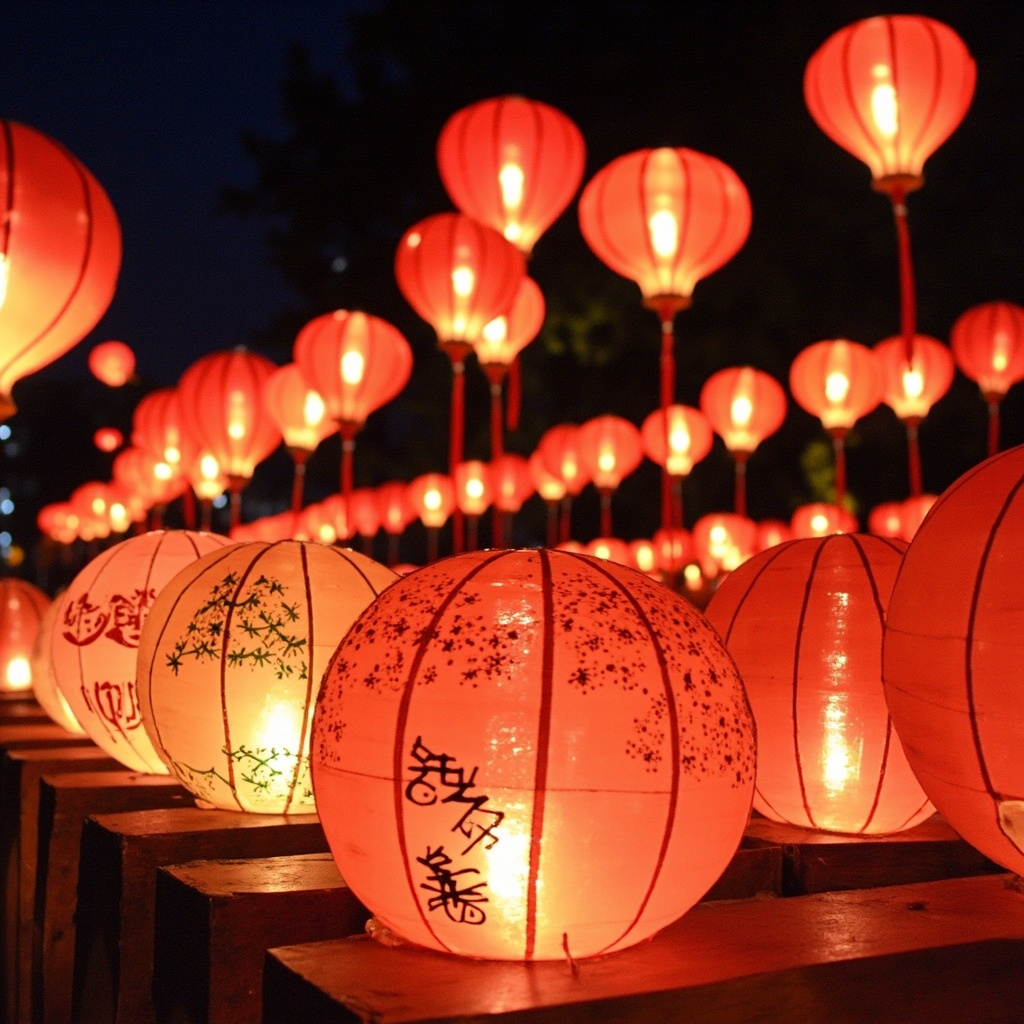
The Lantern Festival, known as Yuanxiao Jie (元宵节), is a vibrant Chinese festival celebrated on the 15th day of the first lunar month
What is the Lantern Festival (Yuanxiao Jie)?
The Lantern Festival, known as Yuanxiao Jie (元宵节), is a vibrant Chinese festival celebrated on the 15th day of the first lunar month. It marks the first full moon of the new year and serves as the official conclusion of the two-week-long Lunar New Year holiday period, bringing the festivities to a close.
This day signifies the end of the Spring Festival celebrations that begin on Chinese New Year's Eve. While the Lunar New Year ushers in the new year with family reunions and traditions, the Lantern Festival is the grand finale. The name itself, Yuanxiao Jie, can be understood as "first night festival," with Yuan (元) meaning first or prime, and Xiao (宵) meaning night, referencing the first full moon night. To help you understand the sequence of events, we have created a simple festival timeline below. Key terms like Yuanxiao Jie are also available in our vocabulary lists for pronunciation and character practice.
Historical Origins and Significance
The Lantern Festival's cultural history began over 2,000 years ago in the Han Dynasty, initially as a solemn Buddhist rite of honoring the Buddha with lights. Over centuries, this imperial and religious practice evolved into the vibrant, widespread folk festival we recognize today, marking the joyful conclusion of New Year festivities.
The festival's roots are most commonly traced back to the Han Dynasty (206 BCE – 220 CE). A pivotal moment occurred during the reign of Emperor Ming (57–75 CE), a proponent of Buddhism. According to historical accounts, he learned that Buddhist monks would light lanterns in monasteries on the fifteenth day of the first lunar month to show respect to the Buddha. In a gesture to honor this practice, Emperor Ming ordered that all temples, households, and the imperial palace light lanterns that evening, a decree which helped spread the custom among the people.
What began as a solemn, palace-led observance gradually transformed into a grand, public celebration. Throughout subsequent dynasties, the festival's scale and activities expanded. As we detail in our interactive festival timeline, dynasties like the Tang and Song added elaborate performances and extended the celebrations over several nights. This evolution cemented its status as a folk festival, a time for family reunion, entertainment, and community bonding. You can explore key terms from this period in our dedicated vocabulary lists.
Key Traditions: Lanterns and Lion Dances
The Lantern Festival's key traditions are vibrant public celebrations marked by the lighting of countless lanterns and energetic street performances. These activities, including the iconic lion dance and stilt walking, symbolize letting go of the past and welcoming a bright, prosperous future for the community as a whole.
As the name suggests, the most prominent tradition is lighting and appreciating lanterns. Parks, streets, and homes are adorned with beautiful, often intricate red lanterns and lanterns of other shapes and colors. Lighting them is a symbolic act of letting go of the past year's self and welcoming a new one, filled with good fortune.
Beyond the lanterns, the streets come alive with various celebration activities. The most famous of these is the lion dance (舞獅, wǔshī). In this performance, two people animate a large lion costume, mimicking the animal's movements in a dynamic, acrobatic dance set to the beat of drums and cymbals. We see this performance as a central event in our festival timeline, as it is believed to bring good luck and scare away evil spirits.
Other folk performances add to the festive atmosphere, such as:
- Stilt walking (踩高蹺, cǎi gāiqiāo): Performers dressed in elaborate costumes walk on stilts, often enacting stories or interacting with the crowds below.
- Dragon dances (舞龍, wǔlóng): While common throughout the New Year period, long, flowing dragon dances are also a popular sight during the Lantern Festival.
We cover the Mandarin terms for these and other traditions in our vocabulary lists to help you connect more deeply with the culture.
The Food: Yuanxiao vs. Tangyuan
We define both yuanxiao (元宵) and tangyuan (汤圆) as the essential glutinous rice balls of the Lantern Festival, though their names and preparation methods differ significantly by region. While they share a symbolic meaning of family reunion, their distinct textures and creation processes are rooted in Northern and Southern Chinese culinary traditions. A common mistake we observe is the interchangeable use of these terms; however, understanding their differences reveals a deeper layer of China's rich regional food culture.
The core of the tradition lies in their shape. The roundness of both yuanxiao and tangyuan symbolizes completeness and togetherness. Eating them with family is an expression of hope for reunion (团圆, tuányuán) and happiness in the new year, a sentiment that marks the culmination of the celebrations detailed in our festival timeline.
Northern Style: The "Rolling" of Yuanxiao (元宵)
In Northern China, the food is called yuanxiao, named directly after the festival itself (Yuanxiao Jie). The preparation is a dynamic process of "rolling." A solid, pre-made cube of sweet filling—like black sesame or sweet red bean paste—is lightly dampened and then tossed in a large, flat basket of dry glutinous rice flour. Through skillful shaking and rolling, the filling picks up layers of flour, growing into a ball. This method results in a chewier texture and a slightly cloudy cooking broth.
Southern Style: The "Wrapping" of Tangyuan (汤圆)
In Southern China, and more commonly seen outside of China, these are called tangyuan, which literally means "soup balls." The process is one of "wrapping," much like making a dumpling. A soft dough is made from glutinous rice flour and water, then flattened into a small disc. A soft or even liquid filling is placed in the center, and the dough is carefully sealed and rolled between the palms until perfectly smooth. Tangyuan are known for their soft, smooth texture, and they cook in a clearer soup. For a breakdown of these and other key terms, be sure to check our vocabulary lists.
| Feature | Yuanxiao (元宵) - Northern Style | Tangyuan (汤圆) - Southern Style |
|---|---|---|
| Preparation | Rolling: Solid filling is rolled in dry flour. | Wrapping: Soft dough is wrapped around filling. |
| Filling | Typically solid and sweet (e.g., sesame, red bean). | Can be sweet or savory, often soft or runny. |
| Texture | Firmer, chewier, with a rougher surface. | Softer, smoother, and more delicate. |
| Cooking Water | Becomes thick and cloudy from the dry flour. | Stays relatively clear. |
| Symbolism | Shared meaning of family reunion and completeness. | Shared meaning of family reunion and completeness. |
Whether you enjoy the rolled yuanxiao of the north or the wrapped tangyuan of the south, both dishes beautifully capture the festive spirit of togetherness that defines the Lantern Festival.
Introduction to Lantern Riddles (Deng Mi)
Lantern riddles, or Deng Mi (灯谜), are a cherished intellectual tradition where challenging brain teasers are written on lanterns for public solving during the festival. This social activity, dating back to the Song Dynasty, combines linguistic wit with festive celebration, offering prizes to those who successfully crack the code.
The history of writing riddles on lanterns is a testament to the festival's evolution from a simple viewing of lights to an interactive cultural event. Originating in the Song Dynasty (960-1279 CE), this practice allowed people to showcase their literary talents. As our festival timeline highlights, this era saw a flourishing of arts and culture, providing the perfect environment for a sophisticated game like Deng Mi to emerge. Literati and common folk alike would write a riddle on a slip of paper and attach it to a lantern for others to ponder.
The social aspect is the heart of the tradition. On the night of the festival, crowds gather around the illuminated lanterns, pointing and discussing the puzzles. These are not simple questions but complex brain teasers that often involve clever wordplay, puns, and manipulation of Chinese characters. When someone believes they have the answer, they approach the lantern's owner or a designated booth to present their solution.
If the answer is correct, the solver is rewarded with a prize. These are typically not extravagant but are symbolic of the intellectual victory. Prizes can range from a small bag of yuanxiao, a writing brush, an inkstone, or other small gifts. This element of competition and reward transforms the act of viewing lanterns into a lively and engaging "battle of wits" for the entire community. The complexity of these riddles often requires a deep understanding of language, which is why exploring our vocabulary lists can provide insight into the kind of wordplay involved.
How Chinese Riddles Work: A Language Guide
Chinese riddles (灯谜, dēngmí) are a sophisticated intellectual game central to the Lantern Festival, relying on the unique structure of the Mandarin language. They challenge participants to think beyond literal meanings by leveraging tonal homophones, the deconstruction of Chinese characters into their base components (radicals), and clever visual or semantic wordplay.
We've observed that learners who actively use our vocabulary lists often have an advantage with these puzzles, as they are more attuned to the nuances of character meaning and pronunciation. As you can see on our festival timeline, riddle-solving is a peak activity, so understanding how they work is key to participating. The three primary mechanics are:
1. Puns and Homophones (谐音 - xiéyīn)
This is the most common type of riddle, playing on the fact that many Chinese characters share the same pronunciation but have entirely different meanings. A riddle's clue might describe one thing, but the answer is a word that simply sounds the same.
- Example Riddle: 狼来了 (láng lái le) - "The wolf is coming!"
- Answer: 杨桃 (yáng táo) - "Starfruit"
- Explanation: The phrase for "the wolf is coming" sounds very similar to the Mandarin words for "sheep" (羊, yáng) and "fleeing" (逃, táo). The riddle plays on the logical action (sheep fleeing) to point you to a homophone (starfruit).
2. Character Decomposition (字谜 - zìmí)
This technique involves breaking down Chinese characters into their constituent parts, or radicals. The riddle provides clues that describe the individual pieces, which you must then mentally reassemble to form a single, new character.
- Example Riddle: 一口咬掉牛尾巴 (yì kǒu yǎo diào niú wěi ba) - "One mouth bites off the cow's tail."
- Answer: 告 (gào) - "to tell" or "to announce"
- Explanation: The character for "mouth" is 口 (kǒu). The character for "cow" is 牛 (niú). If you take the "tail" off of 牛 (the final vertical stroke), you are left with the top part. Placing 口 on top of this modified character creates 告.
3. Visual and Semantic Wordplay (会意 - huìyì)
This method uses the visual shape or the combined meaning of characters to form a clue. It's less about deconstruction and more about creative interpretation of what a character looks like or represents.
- Example Riddle: 一加一 (yī jiā yī) - "One plus one."
- Answer: 王 (wáng) - "king"
- Explanation: This riddle has two layers. The most common answer is 王. The character for "one" is 一. The character for "ten" is 十. If you add "one" (一) to "one" (一), you could get 二 (èr - "two"). But if you add "one" (一) to "ten" (十), you get the character for "king" (王). The riddle tricks you into a different kind of addition.
Sample Riddles for Beginners
Chinese lantern riddles (灯谜, dēngmí) are a beloved part of the festival, testing wit through clever wordplay and the structural deconstruction of characters. To help you get started, we've selected a few easy riddles that demonstrate the linguistic creativity involved in this popular tradition, providing both examples and answers.
Example 1: A Character Riddle
This type of riddle asks you to guess a single Chinese character based on a descriptive phrase.
- Riddle: 王先生白小姐, 坐在石头上 (Wáng xiānshēng bái xiǎojiě, zuò zài shítou shàng)
- Translation: "Mr. Wang and Miss Bai are sitting on a rock."
- Hint: The answer is a single Chinese character. Think about how the characters for the key nouns in the riddle can be combined.
Answer: 碧 (bì)
- Explanation: This is a classic example of a character-building riddle. It requires you to literally assemble a new character from its parts mentioned in the clue. The character for "Wang" (王), the character for "white" (白, from Miss Bai), and the character for "rock" (石) combine to form the character 碧 (bì), which means "jade green."
Example 2: An Object Riddle
This riddle describes an object using metaphors and personification, asking you to identify it.
- Riddle: 身体圆又长, 浑身穿红袍, 为人办喜事, 自己却遭殃 (Shēntǐ yuán yòu cháng, húnshēn chuān hóng páo, wèirén bàn xǐshì, zìjǐ què zāoyāng)
- Translation: "Its body is round and long, dressed entirely in a red robe. It helps people with joyous occasions, but suffers a disaster itself."
- Hint: What object is red, used for celebrations like the Lantern Festival, and is destroyed in the process?
Answer: Firecracker (鞭炮, biānpào)
- Explanation: This riddle paints a picture of a common celebratory item. The "round and long body" in a "red robe" describes the appearance of a firecracker. They are essential for "joyous occasions," but they "suffer a disaster" by being lit and exploding.
As you can see, these easy riddles offer a fun way to engage with the language and culture. You can learn more about when these activities happen by viewing our festival timeline, and for more key terms related to the celebration, our vocabulary lists are an excellent resource.
Essential Vocabulary for the Lantern Festival
To fully appreciate the Lantern Festival's traditions, from the food to the games, we've compiled a list of essential terms. This list, like our other vocabulary lists for key dates on the festival timeline, provides the Chinese characters, Pinyin pronunciation, and English definitions for the core concepts you'll encounter.
-
元宵 (Yuánxiāo) The name of the festival itself, meaning "first night," which refers to the first full moon of the lunar year. It is also the name of the sweet glutinous rice balls traditionally eaten during the celebration, symbolizing family togetherness.
-
灯笼 / 燈籠 (Dēnglong) The Chinese word for lantern. These iconic, often red, paper or silk lanterns are decorated and lit to symbolize hope, good fortune, and letting go of the past year's troubles as the new year begins in earnest.
-
猜灯谜 / 猜燈謎 (Cāidēngmí) The traditional activity of "guessing lantern riddles." Riddles are written on notes and attached to lanterns for people to solve, making it a popular and intellectually stimulating game for all ages during the festival.
-
团圆 / 團圓 (Tuányuán) A word meaning "reunion" or "togetherness." The round shape of the full moon and the yuanxiao dumplings are powerful symbols of this concept, which is central to the festival's theme of family unity.
Modern Celebrations and Light Shows
Modern Lantern Festival celebrations blend ancient tradition with contemporary technology, transforming public spaces into dazzling spectacles. While traditional paper lanterns remain, cities now feature massive light shows, electric lantern exhibitions in public parks, and synchronized drone performances that illuminate the night sky, offering a new way to experience this historic event.
As our festival timeline illustrates, this embrace of technology is a recent but significant development. Today, major cities host large-scale exhibitions in public parks and cultural centers. These events feature enormous, intricate electric lanterns shaped like dragons, phoenixes, and zodiac animals, often incorporating movement and sound. These modern festival displays are a far cry from the simple paper lanterns of the past, showcasing incredible artistry and engineering.
The most cutting-edge evolution is the use of drone shows. Hundreds or even thousands of synchronized, light-equipped drones take to the sky to form complex, moving pictures that tell stories or create festive imagery. This high-tech version of "lighting up the sky" has become a popular and spectacular alternative to traditional fireworks. To help you discuss these modern festivities, we have updated our vocabulary lists with terms related to technology and public exhibitions.
Conclusion
The Lantern Festival serves as the beautiful and meaningful culmination of the entire Spring Festival period, blending family reunion with intellectual fun and ancient traditions. This summary of cultural heritage marks the first full moon of the new lunar year, bringing communities together for a final night of celebration before life returns to its normal rhythm.
As our festival timeline shows, this day is the grand finale of the New Year's celebrations. The traditions we've explored—from the glowing lanterns to the challenging riddles—underscore the deep importance of family and learning in Chinese culture. The shared meal of tangyuan or yuanxiao symbolizes togetherness, while the clever wordplay of the riddles encourages wit and knowledge, a spirit you can engage with by exploring our vocabulary lists. We encourage you to find or make some tangyuan to experience this delicious piece of cultural heritage for yourself.
Q: What is the difference between Yuanxiao and Tangyuan?
A: ### What is the difference between Yuanxiao and Tangyuan? While both Yuanxiao and Tangyuan are sweet glutinous rice balls eaten during the Lantern Festival, their key difference lies in preparation and regional tradition. Yuanxiao, popular in Northern China, are made by rolling the filling in dry flour, whereas Tangyuan, common in the South, are made by wrapping filling in a soft dough.
This fundamental difference in how they are made leads to distinct textures, fillings, and even cooking results.
Preparation Method:
- Yuanxiao (元宵): The process is often described as "rolling" (摇, yáo). A hard, cubed filling (like sweet black sesame or red bean paste) is dipped in water and then tossed in a large, flat basket of dry glutinous rice flour. This is repeated until the ball builds up concentric layers of flour, resulting in a less uniform shape.
- Tangyuan (汤圆): The process is "wrapping" (包, bāo), similar to making a dumpling. A soft, pliable dough is made by mixing glutinous rice flour with water. A piece of dough is flattened, the filling is placed in the center, and it's sealed and rolled by hand into a perfect sphere.
Texture and Filling:
- Yuanxiao: Have a chewier, firmer, and slightly rougher texture. The fillings must be solid and dry to withstand the rolling process.
- Tangyuan: Are soft, smooth, and glutinous. They can accommodate a wider variety of fillings, including more liquid-like sweet fillings (like custard) and even savory fillings (like minced meat), which are not traditional for the Lantern Festival but are common on other occasions.
Cooking:
- Yuanxiao: Take longer to cook (around 15-20 minutes). The cooking water becomes thick and cloudy from the excess dry flour that comes off the surface.
- Tangyuan: Cook much faster (around 5-8 minutes). The water they are boiled in remains relatively clear.
Here is a summary of the key differences:
| Feature | Yuanxiao (元宵) | Tangyuan (汤圆) |
|---|---|---|
| Region | Northern China | Southern China |
| Preparation | "Rolled" in dry flour | "Wrapped" in soft dough |
| Texture | Chewy, firm, layered | Soft, smooth, glutinous |
| Filling | Solid, sweet fillings (e.g., sesame, nut) | Can be solid, liquid, or savory |
| Cooking Water | Becomes thick and cloudy | Stays relatively clear |
| Occasion | Primarily for the Lantern Festival | Lantern Festival, Winter Solstice, weddings |
Q: Why are riddles associated with the Lantern Festival?
A: Riddles became a popular Lantern Festival tradition during the Song Dynasty (960–1279 AD), adding an element of intellectual fun and community interaction to the celebrations. People write riddles on notes attached to lanterns, inviting festival-goers to guess the answers and often win small prizes for their cleverness.
This activity, known as "guessing lantern riddles" (猜燈謎, cāi dēng mí), transformed the festival from a purely visual spectacle into an engaging intellectual game. The riddles are a unique form of wordplay that often relies on the structure and sounds of Chinese characters, making them a celebration of language and wit.
For example, a classic riddle might be:
- Riddle: 王先生白小姐坐在石頭上 (Wáng xiānshēng bái xiǎojiě zuò zài shítou shàng) — "Mr. Wang and Miss Bai are sitting on a rock."
- Answer: The character 碧 (bì) — "jade green."
This answer works because the character 碧 is a composite of the characters for Wang (王), Bai (白), and rock (石). This clever construction highlights how lantern riddles test one's knowledge of literature, history, and the Chinese language itself, making them a cherished and intellectually stimulating part of the holiday.
Q: What do the lanterns symbolize?
A: Lanterns at the Lantern Festival are rich with symbolism, primarily representing the letting go of the past year and welcoming a bright future. Their light signifies hope, guidance, and good fortune, while their often-round shape reflects the core cultural value of family reunion and completeness as the New Year celebrations conclude.
The symbolism of the lanterns can be understood through several key themes:
- Hope and a Bright Future: The most fundamental meaning comes from the light itself. Lighting and releasing lanterns into the night sky is a way to send off one's wishes for the new year, with the light guiding the way to a bright and prosperous future.
- Letting Go of the Past: As the Lantern Festival marks the very end of the two-week Chinese New Year celebration, the act of releasing a lantern symbolizes letting go of the troubles and self of the past year to make a fresh start.
- Family Reunion (团圆, tuányuán): The round shape of traditional lanterns mirrors the full moon on this night. Both are powerful symbols of wholeness and family togetherness, a central value in Chinese culture.
- Good Fortune and Vitality: The color red, overwhelmingly popular for lanterns, is a classic symbol of happiness, good luck, and prosperity in Chinese tradition. The light and warmth are also associated with life and vitality.
Historically, the lanterns were also believed to ward off evil spirits and protect the community, a tradition that has evolved into the modern celebration of hope and renewal.
Q: Is the Lantern Festival a public holiday in China?
A: No, the Lantern Festival is not an official public holiday in mainland China where people get a day off from work or school. Although it marks the grand finale of the Chinese New Year festivities, the national holiday period usually concludes well before this day, requiring most people to return to their normal routines.
Celebrations for the Lantern Festival, such as viewing lanterns, eating yuanxiao, and solving Chinese riddles, predominantly take place in the evening after the workday is over. While not a legal holiday, its cultural importance is immense, and many public spaces and communities host vibrant events to honor the tradition and officially cap off the Spring Festival season.
Explore Chinese Culture
Discover practical guides, cultural insights, and tips for celebrating Chinese festivals with confidence and respect.
Start Learning →Recent Posts
Check out our latest articles
Engaging in simple Chinese festival small talk is a powerful way to show respect and build a genuine cultural connection.
In Chinese business culture, holidays are not just breaks from work; they are critical opportunities to strengthen professional connections.
Chinese birthday traditions are deeply rooted in the concept of longevity and respect for elders,
The Chinese Ghost Festival, also known as the Hungry Ghost Festival, is a traditional holiday rooted in ancestor worship
The Dragon Boat Festival, known in Mandarin as the Duanwu Festival (端午节), is a major traditional holiday celebrated in China and across East Asia
The Mid-Autumn Festival is a traditional harvest celebration that falls on the 15th day of the 8th month of the lunar calendar.