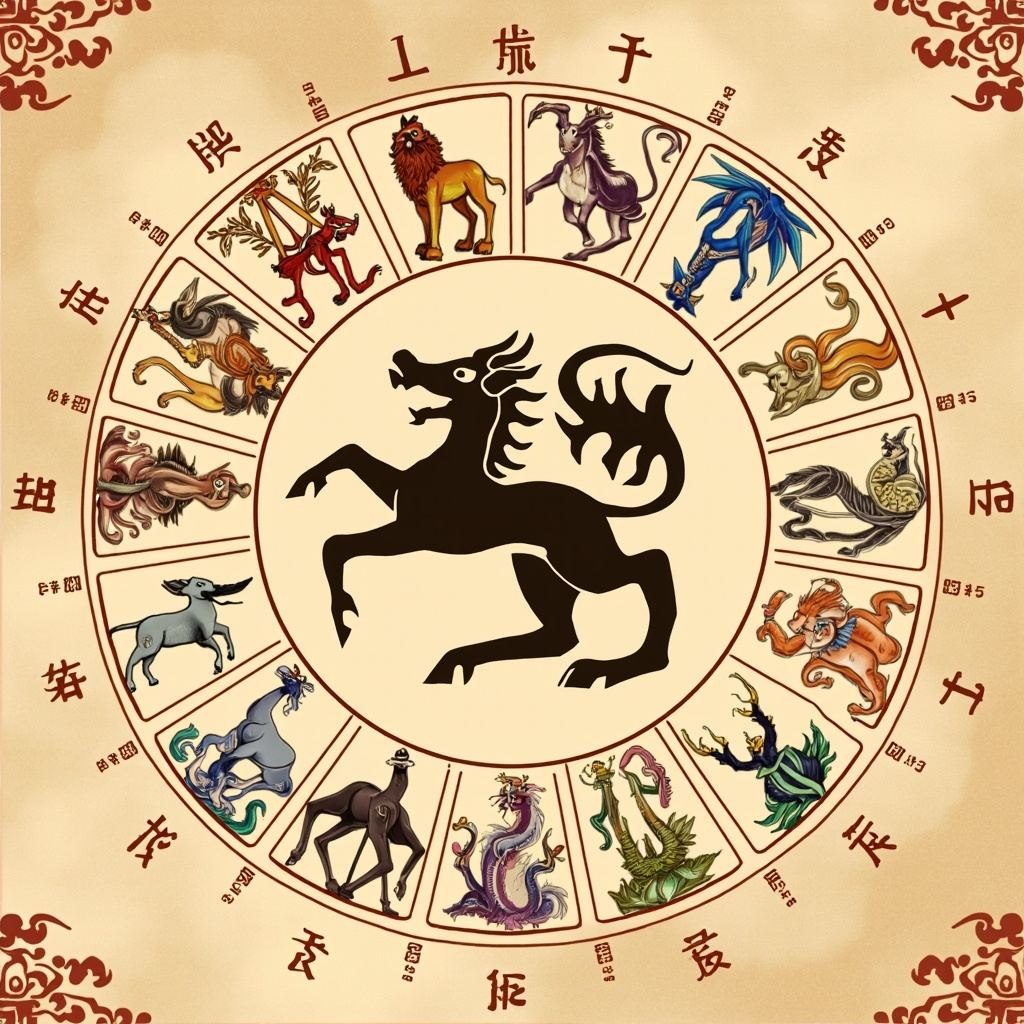
The Chinese zodiac, known as 生肖 (Shēngxiào), is a traditional classification scheme that assigns an animal and its reputed attributes to each year in a repeating 12-year cycle
What is the Chinese Zodiac (Shengxiao)?
The Chinese zodiac, known as 生肖 (Shēngxiào), is a traditional classification scheme that assigns an animal and its reputed attributes to each year in a repeating 12-year cycle. This system is a fundamental part of Chinese culture, used to date the years and understand personality traits based on one's birth year. .
Unlike Western astrology which is tied to birth months, your Shengxiao is determined by your birth year according to the lunar calendar. The term 生肖 (Shēngxiào) literally translates to "birth likeness," reflecting the belief that people born in a certain year share characteristics with that year's animal. This system is deeply embedded in daily life and serves as a common cultural reference point.
The system operates on a continuous 12-year cycle, with each year represented by a different animal in a fixed order:
- Rat (鼠, shǔ)
- Ox (牛, niú)
- Tiger (虎, hǔ)
- Rabbit (兔, tù)
- Dragon (龙, lóng)
- Snake (蛇, shé)
- Horse (马, mǎ)
- Goat (羊, yáng)
- Monkey (猴, hóu)
- Rooster (鸡, jī)
- Dog (狗, gǒu)
- Pig (猪, zhū)
Once the cycle completes with the Pig, it restarts with the Rat. For example, 2020 was the Year of the Rat, and the next Year of the Rat will be 2032.
The Chinese zodiac is more than just a fun tradition. It is a cultural tool for understanding time, people, and relationships. It plays a significant role in everything from social introductions and calculating age to festive celebrations . Knowing someone's Shengxiao is a quick way to establish a connection and is a frequent topic of conversation.
The zodiac animals also appear frequently in Chinese art, literature, and everyday objects. You will see them on calendars, in restaurants, and as decorative items throughout Chinese communities worldwide.
The 12 Zodiac Animals in Order
The Chinese zodiac, or 生肖 (shēngxiào), consists of twelve animals in a fixed, repeating cycle. This specific sequence, starting with the Rat and ending with the Pig, is traditionally explained by the legend of the "Great Race," where the animals' finishing order in a celestial race determined their place in the zodiac.
According to folklore, the Jade Emperor organized a race to decide which animals would be included in the calendar cycle. The clever Rat finished first by riding on the Ox and jumping off at the finish line, while the diligent Pig came in last. This story provides a memorable cultural anchor for why the sequence is what it is and is never altered.
Here are the twelve animals in their official order, along with their names in Mandarin Chinese.
| # | Animal | Chinese (Pinyin) |
|---|---|---|
| 1 | Rat | 鼠 (shǔ) |
| 2 | Ox | 牛 (niú) |
| 3 | Tiger | 虎 (hǔ) |
| 4 | Rabbit | 兔 (tù) |
| 5 | Dragon | 龙 (lóng) |
| 6 | Snake | 蛇 (shé) |
| 7 | Horse | 马 (mǎ) |
| 8 | Goat | 羊 (yáng) |
| 9 | Monkey | 猴 (hóu) |
| 10 | Rooster | 鸡 (jī) |
| 11 | Dog | 狗 (gǒu) |
| 12 | Pig | 猪 (zhū) |
Knowing this fixed order is the first step to finding your own animal sign and understanding its place within the 12-year cycle. Each animal also has an associated element (wood, fire, earth, metal, and water) that cycles every two years, creating a 60-year combination cycle used in traditional Chinese astrology.
The characteristics traditionally associated with each animal are based on observations of their behavior. For example, Rats are considered clever and resourceful because of their ability to survive and thrive in various environments. Oxen are valued for their diligence and strength, reflecting their role as working animals in traditional agriculture.
How to Ask: "What is Your Sign?"
To ask someone their Chinese zodiac sign in Mandarin, the most common and direct phrase is Nǐ shǔ shénme? (你属什么?). This question uses the special verb "shǔ" (属), which specifically means "to belong to" in the context of one's birth year animal, making it a key piece of zodiac-related vocabulary.
This is one of the most useful Mandarin phrases for starting a friendly, culturally relevant conversation. The phrase breaks down as follows:
- Phrase: Nǐ shǔ shénme?
- Characters: 你属什么?
- Literal Translation: "You belong to what?"
The Key Verb: shǔ (属)
The most important part of asking someone's zodiac sign is using the correct verb: shǔ (属). This verb is unique and essential for this specific context.
In English, we ask "What is your sign?" A direct translation might use the verb 是 (shì), meaning "to be." However, in Mandarin, you do not ask what someone's sign is; you ask what animal sign they belong to.
The verb shǔ (属) means "to belong to" or "to be affiliated with." While it can be used for other affiliations, its most common, everyday use is for the Chinese zodiac. Using this verb shows a correct and natural understanding of the language and culture.
The sentence structure is simple:
- 你 (nǐ): You (subject)
- 属 (shǔ): to belong to (verb)
- 什么 (shénme): what? (object)
When you learn this phrase, you are not just memorizing words. You are learning the cultural concept that your birth year animal is a group you are a part of. This small linguistic detail reflects a deeper cultural understanding of identity and belonging.
How to Answer: "I Belong to the..."
To state your Chinese zodiac sign, you use the simple and direct phrase Wǒ shǔ [Animal] (我属...). The key verb, shǔ (属), specifically means "to be born in the year of," a unique piece of Chinese grammar for this context. This structure directly translates to "I belong to the [Animal]."
When someone asks for your zodiac sign, this is the standard and most natural way to respond. The structure is consistent for all twelve animals.
Phrase Breakdown:
- Wǒ (我): I / me
- shǔ (属): to belong to; to be born in the year of
- [Animal]: The name of your zodiac animal in Mandarin
Here are a few examples of this pattern in action for answering zodiac sign questions:
To say you are the Dragon:
- Wǒ shǔ Lóng. (我属龙。)
- "I belong to the Dragon."
To say you are the Tiger:
- Wǒ shǔ Hǔ. (我属虎。)
- "I belong to the Tiger."
To say you are the Rabbit:
- Wǒ shǔ Tù. (我属兔。)
- "I belong to the Rabbit."
A crucial point regarding Chinese grammar is the use of shǔ (属). While learners often default to the common verb for "to be," which is shì (是), this would be incorrect. Saying "Wǒ shì Lóng" (我是龙) literally means "I am a dragon," which is not the intended meaning when discussing the zodiac. Always use shǔ (属) when stating your animal sign.
Calculating Your Sign: The Lunar Calendar Rule
Your Chinese zodiac animal is determined by your birth year according to the traditional lunisolar calendar, not the standard Gregorian (solar) calendar. This means the zodiac year begins on the Lunar New Year, which falls on a different date each January or February, creating a crucial cutoff point.
A common mistake is assuming the zodiac animal changes on January 1st. If your birthday is in January or early February, you may actually belong to the previous year's zodiac animal, so it is essential to check the specific date of the Lunar New Year for your birth year.
The Solar vs. Lunar Calendar Difference
The calendar most of the world uses is the Gregorian calendar, a solar calendar based on the Earth's 365.25-day orbit around the sun. Its New Year is fixed on January 1st. You can read more about .
The Chinese zodiac, however, follows a traditional lunisolar calendar. This system tracks time using both the cycles of the moon and the Earth's orbit around the sun. Because of this, the Lunar New Year (春节, Chūnjié), which is the start of the new zodiac year, is a movable holiday, occurring on the second new moon after the winter solstice. This date typically falls between January 21st and February 20th. .
The January/February Birthday Rule
This calendar difference creates a simple but critical rule for anyone with a birthday in January or February.
Rule: If you were born before the Lunar New Year in your birth year, your zodiac sign is the animal of the previous lunar year. If you were born on or after the Lunar New Year, your sign is the animal of your birth year.
For example, 1990 was the Year of the Horse. However, the Lunar New Year in 1990 fell on January 27th.
- Someone born on January 25, 1990, was born before the Year of the Horse began. Therefore, their sign is the Snake, the animal of the previous year (1989).
- Someone born on February 10, 1990, was born after the new year began. Their sign is the Horse.
To be certain, always look up the exact date of the Lunar New Year for the year you were born, especially if you have a birthday in early January through late February. There are many online resources and calendars that list the Lunar New Year dates for each year.
Ben Ming Nian: Your Year of Fate
Your Ben Ming Nian (本命年), or "Year of Fate," is the zodiac year corresponding to your birth animal, which recurs every 12 years. Contrary to what many assume, this is culturally viewed not as a lucky year, but as a period of potential challenges and bad luck due to a celestial clash.
This belief is tied to the Taoist deity Tài Suì (太岁), the Grand Duke of Jupiter, who governs the fortunes of the mortal world for a given year. You can learn more about . During your Ben Ming Nian, you are said to be in direct opposition to the reigning Tai Sui. This "offense" is thought to attract misfortune, obstacles, and instability. Therefore, instead of a year of celebration, it is traditionally seen as a time to be cautious and vigilant.
To ward off these negative influences, the most common tradition is to wear the color red. Red is a powerful and auspicious color in Chinese culture, symbolizing prosperity, happiness, and protection. It is believed to scare away evil spirits and negative energy. Throughout their Year of Fate, many people will wear red clothing, especially red underwear, socks, or a red string bracelet. For the best protective effect, tradition suggests these red items should be gifts from family members or a significant other.
Using Zodiac Signs for Social Etiquette
In Chinese customs, asking for someone's zodiac sign (生肖, shēngxiào) is a socially graceful and indirect method for determining their age. This practice avoids the bluntness of asking directly and uses the zodiac's 12-year cycle to place a person within a generational context, which is important for showing proper respect.
While asking "How old are you?" (你多大? Nǐ duōdà?) is common among close friends, it can be considered impolite when speaking to a new acquaintance or someone significantly older. A much smoother and more common icebreaker is to ask, "What is your zodiac sign?" (你属什么? Nǐ shǔ shénme?). This question is a friendly and standard part of getting to know someone in Chinese-speaking communities.
Once you know someone's animal sign, you can easily calculate their approximate age. The Chinese zodiac operates on a repeating 12-year cycle. Based on the person's general appearance, you can make a highly accurate guess.
For example:
- You meet someone who tells you they were born in the Year of the Tiger.
- You know the recent Tiger years are 2022, 2010, 1998, 1986, and so on.
- If the person appears to be in their mid-20s, you can confidently deduce they were born in 1998.
This subtle method of "guessing age" is a key piece of social etiquette, demonstrating cultural awareness and respect.
While detailed fortune-telling is outside our scope, zodiac signs are also used for a lighthearted look at personal compatibility. Similar to how Westerners might discuss astrological sun signs, it is common to hear casual remarks about which animal signs are believed to get along best. This is generally treated as a fun conversation starter rather than a serious belief.
Summary
The Chinese Zodiac, or Shēngxiào (生肖), is more than just an astrological system. It is a deeply ingrained part of Chinese culture that influences daily conversation, personal identity, and social interactions. Understanding your animal sign and how to discuss it is a key step toward greater cultural fluency and connection.
In this guide, we have explored the 12 animal signs, how to find your own, and the essential vocabulary for discussing them. This knowledge serves as a fantastic icebreaker and a common cultural reference point, offering a shared framework for building rapport. Achieving a basic grasp of the Shengxiao is a significant milestone in your journey toward cultural understanding.
The best way to build confidence is to practice. We encourage you to use the phrases you have learned, such as asking "你属什么?" (Nǐ shǔ shénme?) and answering with "我属..." (Wǒ shǔ...). Mastering this simple exchange is a practical and fun way to engage with a tradition that is central to Chinese social life.
Q: What are the 12 Chinese zodiac signs in order?
A: The 12 Chinese zodiac signs, or 生肖 (shēngxiào), follow a fixed 12-year cycle that always begins with the Rat and ends with the Pig. The complete, unchangeable order is: Rat, Ox, Tiger, Rabbit, Dragon, Snake, Horse, Goat, Monkey, Rooster, Dog, and Pig, after which the cycle repeats. .
This sequence is traditionally explained by the legend of the "Great Race," a mythological contest where the animals' finishing order determined their place in the zodiac.
Here are the 12 animals in their correct order, along with their Chinese names and Pinyin pronunciation:
| Order | Animal | Chinese (Pinyin) |
|---|---|---|
| 1 | Rat | 鼠 (shǔ) |
| 2 | Ox | 牛 (niú) |
| 3 | Tiger | 虎 (hǔ) |
| 4 | Rabbit | 兔 (tù) |
| 5 | Dragon | 龙 (lóng) |
| 6 | Snake | 蛇 (shé) |
| 7 | Horse | 马 (mǎ) |
| 8 | Goat | 羊 (yáng) |
| 9 | Monkey | 猴 (hóu) |
| 10 | Rooster | 鸡 (jī) |
| 11 | Dog | 狗 (gǒu) |
| 12 | Pig | 猪 (zhū) |
Q: How do I ask someone for their Chinese zodiac sign?
A: To ask for someone's Chinese zodiac sign, the most common and natural phrase is "你属什么?" (Nǐ shǔ shénme?). This question is a friendly and often indirect way to inquire about someone's age, as the zodiac sign reveals their birth year within a 12-year cycle, making it a popular icebreaker.
Here are the most common ways to ask, from informal to formal:
| Chinese (Pinyin) | English Translation | Context |
|---|---|---|
| 你属什么? (Nǐ shǒu shénme?) | "What do you belong to?" | The most common, casual way to ask. The verb 属 (shǔ) means "to be born in the year of." |
| 您属什么? (Nín shǔ shénme?) | "What do you belong to?" | A more polite version using 您 (nín). Use this for elders or people you wish to show respect to. |
| 你的生肖是什么? (Nǐ de shēngxiào shì shénme?) | "What is your zodiac sign?" | A more literal and slightly more formal question. It uses the word 生肖 (shēngxiào), which means "Chinese zodiac." |
Cultural Note on Asking
Asking about someone's zodiac sign is generally not considered rude. It is a common conversation starter. Because the zodiac cycle is 12 years long, it allows people to guess an age range without asking the more direct and potentially sensitive question, "How old are you?"
How to Answer the Question
To state your own sign, you use the same verb, 属 (shǔ). The structure is:
我属 + [Your Animal Sign] (Wǒ shǔ + [animal])
For example:
- 我属龙。 (Wǒ shǔ lóng.) — "I am a Dragon."
- 我属兔。 (Wǒ shǔ tù.) — "I am a Rabbit."
Q: Does the Chinese zodiac sign change on January 1st?
A: No, the Chinese zodiac sign does not change on January 1st. The transition to the new zodiac animal occurs on Chinese New Year's Day (春节, Chūnjié), which is determined by the Chinese lunisolar calendar and typically falls between late January and mid-February on the Gregorian calendar. .
The zodiac cycle is intrinsically linked to the traditional Chinese calendar (农历, nónglì), not the Gregorian calendar that begins on January 1st. This means your zodiac animal is determined by the start of the Chinese New Year in your birth year.
This distinction is crucial for anyone born in January or February. For example, Chinese New Year in 1990 was on January 27th. If you were born on January 20, 1990, your zodiac sign is the Snake (the animal for 1989), not the Horse. To be certain of your sign, you must check the specific date of Chinese New Year for your birth year.
Q: What is Ben Ming Nian?
A: Ben Ming Nian (本命年) is your zodiac year, which occurs every 12 years when the current year's animal sign matches your birth sign. Contrary to what many expect, this year is traditionally considered unlucky in Chinese culture, as it is believed you are offending the God of Age, Tai Sui (太岁). .
The term literally translates to "one's own destiny year." The core belief is that during your Ben Ming Nian, you are more vulnerable to misfortune, accidents, and major life changes. This is known as fàn tài suì (犯太岁), or "offending the Grand Duke Jupiter."
To counteract this potential bad luck, a widespread tradition is to wear the color red. Red is a highly auspicious color in Chinese culture, symbolizing prosperity, loyalty, and happiness, and it is believed to ward off evil spirits and negativity. During their Ben Ming Nian, people often wear red items, such as:
- Red underwear or socks
- A red string bracelet
- A red belt
These items are typically worn for the entire lunar year to provide protection. For example, if you were born in a Year of the Dragon (e.g., 1988, 2000, 2012), then 2024, another Year of the Dragon, is your Ben Ming Nian. .
Explore Chinese Culture
Discover practical guides, cultural insights, and tips for celebrating Chinese festivals with confidence and respect.
Start Learning →Recent Posts
Check out our latest articles
Engaging in simple Chinese festival small talk is a powerful way to show respect and build a genuine cultural connection.
In Chinese business culture, holidays are not just breaks from work; they are critical opportunities to strengthen professional connections.
Chinese birthday traditions are deeply rooted in the concept of longevity and respect for elders,
The Chinese Ghost Festival, also known as the Hungry Ghost Festival, is a traditional holiday rooted in ancestor worship
The Dragon Boat Festival, known in Mandarin as the Duanwu Festival (端午节), is a major traditional holiday celebrated in China and across East Asia
The Mid-Autumn Festival is a traditional harvest celebration that falls on the 15th day of the 8th month of the lunar calendar.